I said yes to my first foster cats before I understood what the job actually required.
The request came through a local group: a nursing mother and four kittens found under a porch. They needed a quiet room for a few weeks. I had space, I had already kept Miso alive through his own crisis, and I assumed the rest would be obvious. It was not.
What follows is the version of the orientation I wish someone had given me in plain language. Not the glossy “you’ll save lives” pitch. The practical, slightly messy list of what you actually need, what the shelter may or may not provide, and how the emotional side lands when the carrier leaves for the last time.
The Gear You Actually Use
Most shelters provide some supplies. Many do not provide everything, and the gaps show up at inconvenient hours.

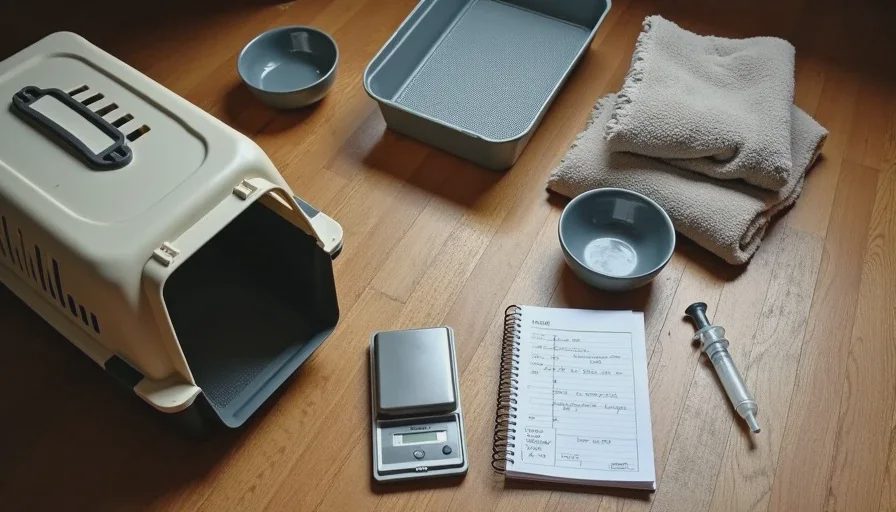
Core items that proved non-negotiable:
A sturdy carrier large enough for the cat or litter to stand and turn
At least one uncovered litter box per adult cat or nursing group, plus a shallow one for young kittens
Unscented clumping litter (and a backup bag)
Ceramic or stainless bowls for food and water
The exact food the shelter or previous caregiver was using, at least for the first week
Soft towels and blankets that can be washed on hot
A digital kitchen scale accurate to the gram or ounce for daily weights on kittens or underweight adults
A basic first-aid kit: digital thermometer, saline, gauze, styptic powder
Syringes (1 ml and 3–5 ml) for oral medication or assisted feeding
A notebook or simple spreadsheet for weight, appetite, stool, and medication logs
Useful but secondary: a heating pad with a cover for very young or recovering animals, a small playpen or exercise pen if you need containment, and a spare litter box for quarantine situations.
I bought several things I rarely used (elaborate cat trees for short-term fosters, scented litter “for odor control,” battery-powered toys that startled more cats than they entertained). The scale, the syringes, and the extra towels earned their space every single time.
The Paperwork and Logistics Nobody Spells Out
Every organization runs differently. Ask these questions before the animal is in your car:
Who covers veterinary costs, and what is the approval process for non-emergency care?
What is the after-hours emergency protocol and which clinic do they use?
Are you expected to transport for vaccines, spay/neuter, or adoption events?
How are potential adopters screened, and do you have any say in the final match?
What is the policy if the foster becomes seriously ill or needs longer-term care than planned?
Can resident pets interact, and if so under what conditions?
Get the answers in writing or in a clear email chain. Verbal assurances evaporate when a kitten spikes a fever at 11 p.m. on a Sunday.
You will also need a simple system for records. Shelters want weights, vaccine dates, and behavioral notes. Adopters want to know whether the cat likes other cats, how they react to the carrier, and whether they have any medical quirks. Writing it down daily takes five minutes and prevents the “I think it was last Tuesday” conversations later.
The Medical and Behavioral Surprises
Even “healthy” intakes can develop upper respiratory infections within days of the stress of moving. Kittens can go from eating well to refusing food in a single afternoon. Parasites appear. Ringworm shows up as a small bald patch that multiplies. None of this means you failed. It means shelter and street animals carry invisible loads that surface once they are in a lower-stress environment.
Have a plan for isolation. A bathroom or spare room with its own litter box and food setup keeps problems contained. Learn how to give oral medication and subcutaneous fluids before you need the skill at 2 a.m. Most shelters will demonstrate if you ask.
Behaviorally, expect a wide range. Some cats walk out of the carrier and claim the couch. Others hide for weeks. Some nurse aggressively. Some ignore the kittens they arrived with. Your job is not to force a personality. It is to keep them safe, fed, and documented while their nervous systems settle.

The Emotional Side No Brochure Mentions
You will get attached. That is not a character flaw. It is the predictable result of feeding, medicating, and worrying about a specific animal for days or weeks. The goodbye is part of the work. It is also the part that lets the next animal take the open spot.
I cried in the car after the first few returns. I still do sometimes. The feeling does not mean you should stop. It means the animal mattered enough to leave a mark. Some fosters become foster fails; most do not. Both outcomes are legitimate.
Protect your resident animals. Proper introductions, separate resources, and realistic expectations about stress in the household matter. Fostering should not come at the cost of the cats already living with you.
Burnout is real. It is acceptable to say no to the next request when you need recovery time. Good organizations would rather have a foster who takes breaks than one who quits entirely.
A Realistic First-Foster Checklist
Before intake
Confirm medical and emergency protocols in writing
Set up a dedicated space with litter, food, water, and hiding options
Stock basic supplies and a scale
Tell household members the plan and the timeline
First 48 hours
Let the animal decompress with minimal handling
Record weight, appetite, and litter box use
Watch for sneezing, discharge, lethargy, or refusal to eat
Ongoing
Daily notes
Prompt communication with the shelter about any changes
Gradual socialization only as the animal tolerates it
At the end
Update the records for the adopter
Allow yourself whatever reaction the goodbye produces
Clean and reset the space before the next one arrives
Fostering is not complicated in theory. In practice it is a series of small, consistent actions performed while tired, sometimes scared, and often more emotionally invested than you planned. The animals do not need perfection. They need someone willing to show up for the ordinary and the difficult parts alike.
I still foster. The list of things I wish I had known has gotten shorter, but the core remains the same: prepare the space, ask the unglamorous questions, keep records, and accept that the goodbye is built into the beginning.
Your cat, your rules. Even the temporary ones.


No notes yet — write the first one.