
I used to be a dog person. Not the casual kind who likes dogs in theory. The kind who planned weekend hikes around a future Labrador, who knew the difference between a proper heel and a loose leash, who believed animals should come when called and sleep on the floor like civilized creatures. Cats were the quiet roommates of people who preferred solitude. Fine for them. Not for me.
Then a one-eyed orange tabby planted itself on my Portland doorstep in the rain and refused to leave.
That was eight years ago. I now live with three cats I never meant to keep, have fostered and rehomed more than forty others, and somehow turned the whole messy process into a writing habit. This site is the result. Not a polished advice column. A debrief. The after-action report of someone who learned almost everything the expensive, exhausting, occasionally heartbreaking way.

The Stray Who Changed the Map
I still don’t know how he got the injury. The left eye was gone, the socket healed over in a rough scar. He was thin but not starving, wary but not feral. He sat under the overhang of my building like he had paid rent. I put out a can of tuna because it was raining and I am not a monster. He ate it, looked at me once, and settled back down.
The next morning he was still there. The morning after that too. By day four I had bought a cheap carrier, a bag of dry food, and an appointment at the low-cost clinic three neighborhoods over. They scanned him for a microchip. Nothing. They estimated age at maybe two or three. They treated the eye socket for infection, gave him vaccines, and handed me a bill that made my freelance bank account flinch.
I told myself I would keep him only until I found a rescue with space. That lasted exactly eleven days. On day twelve he jumped onto the couch while I was watching something forgettable, pressed his whole body against my side, and started the low motorboat purr that still ruins me. I named him Miso because the orange and white patches looked like miso soup left too long on the stove. He became the first foster fail before I even knew the term.
Looking back, the decision was less noble than it felt. I was lonely in a new city, working from home, and a cat who needed me was simpler than most human relationships. I also had no idea what I was signing up for. Miso arrived with an upper respiratory infection that turned into two weeks of syringe feeding, nebulizer sessions in the bathroom, and the particular panic of watching a small body refuse food. I slept on the floor next to the carrier more nights than I care to admit. When he finally started eating on his own, I cried harder than I had when the clinic said the eye was gone for good.
That was the beginning of the education.
Forty Cats Later
Once you successfully keep one sick cat alive, people start asking if you can take another. A friend of a friend had a litter of four under a porch. A local Facebook group posted about a nursing mother found behind a grocery store. The shelter called because they were over capacity and I had a clean bill of health from Miso’s vet. I said yes. Then yes again. Then yes until the calendar filled with intake dates, medication charts, and the quiet dread of the goodbye.
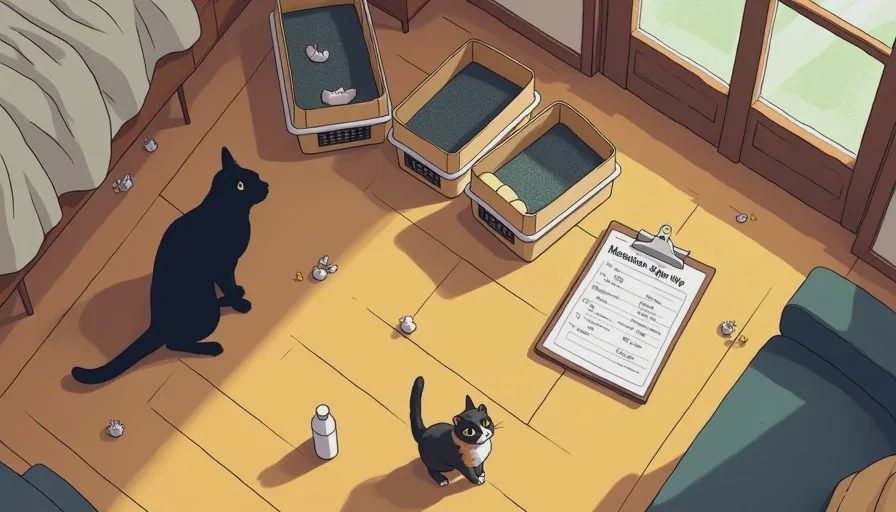
I have tube-fed newborns whose eyes were still sealed. I have bathed ringworm kittens in diluted lime sulfur until my own skin burned. I have sat in the emergency vet parking lot at 2 a.m. with a six-week-old who stopped eating and prayed the numbers on the estimate would somehow shrink. I have also failed at introductions so spectacularly that one resident cat peed on my pillow for a week as protest. I have spent money I did not have on prescription food, on carriers that fit under airplane seats, on the $200 self-cleaning litter box that Dumpling later treated as an elaborate sandbox.
Two more cats stayed. Nori, a black Devon Rex surrendered from a backyard breeding situation, spent her first three months under my bed. I fed her freeze-dried chicken by hand and read work emails out loud so she would get used to the sound of my voice. Dumpling, a calico with the brain of a golden retriever and the body of a furry bowling ball, arrived because I walked past the adoption floor after returning a foster and watched her claw frantically through the cage bars. I am not proud of the decision-making process. I am, however, honest about it.
The number that usually surprises people is forty-plus. Most of them left. That is the point of fostering. You stabilize, socialize, document, and hand them to families who will keep them longer than you can. The goodbyes still hurt. I have cried in the car outside the shelter more times than I can count. The grief is real and specific: you know their favorite hiding spot, the exact pitch of their hungry meow, the way they prefer the left side of the scratching post. Then you let them go so someone else can learn those things. It is the job.
Why Write It Down
I started keeping notes because my memory is unreliable when I am sleep-deprived and covered in kitten formula. Intake weight, stool quality, reaction to new food, first day they used the litter box without assistance. The notes turned into longer entries. The longer entries turned into the realization that most of the advice I found online was either too polished or too judgmental. Forums full of people who had never fostered a sick neonate telling other people they were doing it wrong. Affiliate-heavy listicles that recommended the same three products regardless of the actual cat in front of you.
I wanted the version that said: here is the exact timeline of how Miso almost died in my bathroom, here is the brand of syringe that did not leak, here is how long it took Nori to stop hiding, here is the cardboard box configuration that finally stopped Dumpling from destroying the curtains. No shame. No pressure to buy the expensive version. Just the receipt.
That is what Cat Debrief is. Case files from a multi-cat apartment in Portland. Stories about the cats who left and the three who stayed. Practical notes on introductions, litter boxes, enrichment made from recycling, and the particular emotional math of loving animals you know you will give away. Written by someone who still makes mistakes, still buys the wrong product occasionally, and still believes the cat in front of you knows more than the internet does.
I am not a veterinarian. I am not a certified behaviorist. I am a freelance graphic designer who happens to have spent eight years learning what works for the specific animals who walked or were carried through my door. The illustrations and photos will look decent because that is my day job. The advice will be specific because vague advice has never helped me at 3 a.m.
If you are fostering for the first time, managing three cats who barely tolerate one another, or still recovering from the shock of realizing your new cat will not fetch, you are in the right place. We will talk about the hard parts without pretending they are noble. We will celebrate the small wins that never make it into the glossy rescue posts. And when the next intake arrives looking worse than expected, we will figure it out the same way we always have: one syringe, one cardboard box, one exhausted night at a time.
Your cat, your rules.
That is the only slogan that has ever made sense to me.
Welcome to the debrief.



Letters
No letters yet. Yours could be the first.