
You brought a cat home. Congratulations. Also: the first week is going to feel weird if you have ever lived with a dog.
Dogs usually arrive ready to negotiate. Cats arrive ready to assess the entire situation and decide whether you are worth the effort. They do not come when called. They do not automatically assume the couch is communal. They may hide for two days and then demand dinner at 4 a.m. like they own the place. None of this means you are doing it wrong. It means you now live with a cat.
This is the guide I wish someone had handed me after Miso survived his first week and I suddenly had to figure out normal cat ownership instead of emergency nursing. It is written for people who still expect animals to follow rules that only dogs follow.
Day 0: The Safe Room Setup (Do This Before You Open the Carrier)
Pick one quiet room. Bathroom, spare bedroom, or a section of the living room you can close off. The goal is a space small enough that the cat can find the litter box, food, water, and a hiding spot without a scavenger hunt.
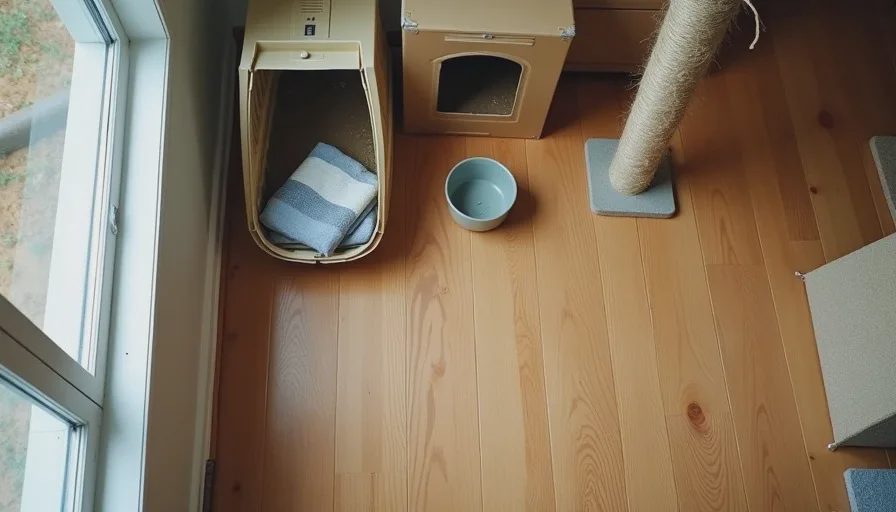
Minimum contents:
One uncovered litter box (large enough for the cat to turn around in) placed away from food and water
Unscented clumping litter, filled 2–3 inches deep
Food and water bowls (ceramic or stainless steel, wide enough that whiskers do not press against the sides)
Whatever food the shelter or previous home was feeding — do not switch yet
A hiding spot: cardboard box on its side, covered bed, or the open carrier itself with a towel
One scratching surface (vertical post or horizontal pad)
A couple of quiet toys
Show the litter box once by gently placing the cat inside after you open the carrier. Then leave. Do not hover. Do not invite friends over to meet the new family member. The first 24 hours are about decompression, not bonding montages.
If you already have other pets, they stay on the other side of the door for now. Scent swapping comes later.
Days 1–3: The Quiet Phase
Most new cats hide. Under the bed, behind the toilet, inside the closet, inside the carrier they arrived in. This is normal. Stress hormones are high. The new environment is full of unfamiliar smells and sounds. Forcing interaction usually makes the hiding last longer.
What you do instead:
Sit in the room and do something quiet — read, work on a laptop, scroll your phone. Talk in a normal voice occasionally. Do not stare.
Offer food and walk away. Many cats will only eat when the room is empty.
Scoop the litter box at least once a day so you know whether they have used it.
Keep the routine boring and predictable. Same feeding times. Same quiet.
Appetite warning: a cat that has not eaten anything in 48 hours needs a vet call. Cats can develop hepatic lipidosis (fatty liver) faster than most people realize. A day of picky eating is common. Two full days of zero intake is not something to wait out.
Litter box misses happen. Clean the spot with an enzymatic cleaner, not regular household products that leave a scent cats can still detect. If misses continue, check whether the box is big enough, clean enough, or located in a high-traffic area.
Body language quick read for dog people:
Dilated pupils + flattened ears + low body = stressed or scared
Slow blink = the closest thing cats give to a smile
Tail straight up with a slight curve at the tip = reasonably comfortable
Tail thrashing = stop whatever you are doing
Days 4–7: The First Signs of a Personality
Around day four or five many cats start making short exploratory trips out of the hiding spot. They may eat in front of you for the first time. They may bat at a dangling toy string and then immediately retreat. This is progress.
You can begin short, low-pressure interactions:
Offer a treat from your open palm and pull your hand back if they do not take it.
Use a wand toy for two or three minutes, then stop while they still want more.
Let them initiate contact. If they rub against your leg, you may pet once or twice along the cheek or back. Stop before they decide they have had enough.
Still no full-house access yet. Wait until the cat is consistently using the litter box, eating on a regular schedule, and showing relaxed body language (tail up, ears forward, voluntary approach) before you open the door to the rest of the apartment. Even then, expand one room at a time and always leave the original safe room available as a retreat.
If you plan to change food brands, wait until after the first week and transition slowly over 7–10 days. Sudden diet changes on top of relocation stress are a reliable way to create diarrhea.

The Dog-Person Adjustments That Matter Most
Cats do not need constant interaction the way many dogs do. Presence is often enough. Sitting in the same room reading is bonding. Forcing play or cuddles is not.
They also do not automatically understand that the entire house is theirs to share. Vertical space helps — a cat tree or even a cleared bookshelf gives them a place to observe without being in the middle of foot traffic. Scratching is not optional furniture destruction; it is how they stretch, mark territory, and keep claws healthy. Provide acceptable surfaces early or they will invent their own.
Night activity is normal. Many cats sleep a large part of the day and become more active when the household quiets down. Closing the bedroom door is allowed if you need uninterrupted sleep. Just make sure food, water, and litter are available on their side.
When to Call the Vet in the First Week
No food intake for more than 48 hours
No urine or stool within the first 24–36 hours
Labored breathing, open-mouth breathing, or constant sneezing with thick discharge
Vomiting more than once or diarrhea that lasts more than a day
Extreme lethargy or inability to stand
Most first-week problems are stress, not crisis. The ones that are medical move fast, so err on the side of a phone call.
A Simple Daily Checklist for Week One
Morning: fresh water, measured food, scoop litter, five quiet minutes in the room
Midday: check that the cat has moved or eaten something
Evening: second meal if feeding twice a day, short play session if the cat is willing, final litter scoop
Night: leave them alone
That is enough. You do not need to narrate every action, invent elaborate enrichment, or prove you are the perfect guardian. Predictability and space do more work than enthusiasm in the first seven days.
I still remember sitting on the floor of that first safe room with Miso after the emergency phase ended, watching him finally walk over to the food dish on his own. It took longer than I expected and less intervention than I had planned. The same pattern has repeated with almost every foster since: give them a small territory they can control, keep the variables low, and let them decide when the world is safe enough to explore.
Your cat already knows how to be a cat. Your job this week is mostly to stop getting in the way while they figure out the new address.
Your cat, your rules.



Letters
No letters yet. Yours could be the first.