Case file: the introduction I absolutely rushed
Dogs and cats together sounded simple when I brought home a young terrier mix during my early fostering days. My resident cat, Miso, was a confident orange tabby who had survived starvation, a respiratory infection, and my first truly terrible attempt at assembling a litter box. I assumed she would set a boundary, the dog would sniff politely, and we would all move on with our lives.
I opened the crate in the living room.
The dog charged forward. Miso launched herself onto the kitchen counter, knocked over a glass of water, and spent the next six hours wedged behind the refrigerator. Nobody was injured, but I had created a much bigger problem than I started with. Miso did not understand that the dog was friendly. She understood that a loud animal had invaded her home and chased her.
That is the first lesson with dogs and cats together: friendly is not the same as safe. The goal is not an adorable nose-to-nose photograph on day one. The goal is boring coexistence, built through controlled exposure and repeated proof that nobody is going to be cornered.
If your cat is hiding, hissing, growling, skipping meals, or avoiding the litter box, slow down. Those are communication attempts, not personal failures. Your cat, your rules.
Set up separate territories before the first meeting
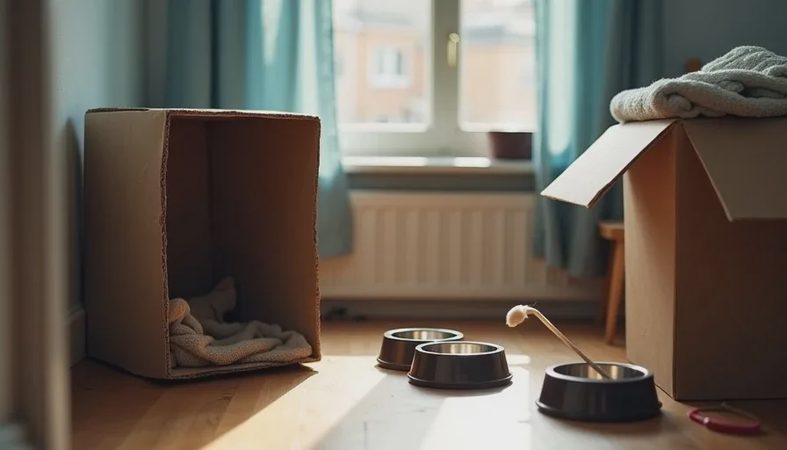
Before the animals see each other, give the cat a protected room with a closed door. A bedroom or office works better than a bathroom if you can manage it. Put the cat's food, water, litter box, scratching surface, bed, and a hiding spot inside. The litter box should be away from food, and the cat should have somewhere to retreat that the dog cannot enter.
For the dog, create a separate resting area with a crate, bed, water, and a few safe chew items. A baby gate is useful because it allows visual access later without giving either animal full freedom. I spent about $35 on a pressure-mounted gate for one foster setup, and it saved me from repeatedly blocking a doorway with a laundry basket.
Dogs and cats together need duplicate resources. Do not make them share one water bowl, one bed, or one narrow hallway. Keep at least one cat escape route open at all times. Cat trees, sturdy shelves, and a cleared dresser can turn a small apartment into a three-dimensional map instead of a chase track.
For the first few days, exchange bedding or small blankets between rooms. Let each animal investigate the other's scent without the pressure of a face-to-face encounter. Feed treats on opposite sides of the closed door. If both animals can eat calmly, move the bowls closer over several meals.
The first visual contact should be almost boring
When the cat is eating normally and the dog is relaxed near the door, use a baby gate or cracked door for a short visual introduction. Keep the dog on a loose leash, not a tight one. Tension on the leash can increase frustration and make staring feel like a job. Ask for a simple sit, reward calm behavior, and end the session before anyone loses control.
Start with two or three minutes. That is enough. If the dog stares, whines, lunges, or tries to paw through the gate, close the visual gap and return to scent work. If the cat crouches, swats at the gate, or refuses treats, the session was too intense. Dogs and cats together progress through calm repetitions, not dramatic breakthroughs.
Avoid holding the cat up for the dog to sniff. I know this looks convenient in videos, but it removes the cat's ability to leave. A cat that feels trapped is more likely to scratch, panic, or associate the dog with danger. Let the cat choose whether to approach. Choice is the entire point.
I spent $42 so you do not have to repeat my setup mistakes
My useful purchases were not glamorous. The $35 gate helped. A $7 bag of high-value freeze-dried chicken treats helped even more. I also used a plain six-foot leash, a washable dog bed, and a cardboard box with two exits. The box became Miso's favorite observation station, despite the fact that I had already spent $60 on a covered cat cave she treated like an enemy bunker.
A pheromone diffuser can be worth trying, but it is not a force field. A standard Feliway diffuser often costs around $20 to $30 and lasts roughly a month. It helped Miso settle during one transition and did almost nothing for Nori, who hid under my bed for three months after arriving from a breeding situation. That difference is why I would not build your entire plan around a product.
Spend money on barriers, secure equipment, and veterinary care before buying calming gadgets. If either animal has a sudden behavior change, stops eating, develops injuries, or shows serious aggression, call a veterinarian or qualified behavior professional. Dogs and cats together are not a DIY contest when safety is at risk.

Read body language before the situation becomes a scene
A relaxed dog may sniff the floor, blink, turn its head away, respond to its name, or lie down. A relaxed cat may groom, sit with a loose posture, accept treats, or walk away without sprinting. Those quiet choices are progress, even if they look unimpressive on camera.
Warning signs include a fixed stare, stiff legs, closed mouth, repeated lunging, stalking, tail lashing, flattened ears, crouching, or frantic escape attempts. Do not punish growling or hissing. Those sounds give you useful information. Punishment can teach an animal to skip the warning and go straight to a bite or scratch.
If a chase starts, do not grab between the animals. Use a barrier, call the dog away if it has a reliable recall, and return everyone to separate rooms. Let the cat decompress. The next session should be easier than the last, not a test of who can tolerate more stress.
How long does peaceful coexistence take?
Some pairs need a week. Others need several months. A confident adult cat and a mellow senior dog may settle quickly, while a fearful cat and a high-prey-drive young dog require a much longer plan. Do not use a neighbor's success story as a deadline for your household.
Begin supervised time in a larger room only after repeated gate sessions are calm. Keep the dog leashed, leave escape routes open, and stay close enough to interrupt without grabbing. Gradually increase the time, then practice short periods where the dog relaxes on a mat while the cat moves around freely.
Dogs and cats together can share a home without becoming best friends. My cats do not need to cuddle with every dog. They need to sleep, eat, use the litter box, and cross the room without expecting a pursuit scene. That is a successful outcome.
The safest households keep management in place even after things improve. Use gates when you leave, separate animals during meals, and never assume a sudden sprint is harmless. Dogs and cats together become easier when the humans remain predictable.
Start with one closed door, one calm meal, and one tiny win. The photograph can wait. Your cat, your rules.

Letters
No letters yet. Yours could be the first.