Case file: Miso, orange tabby, approximately eight years old, former malnutrition patient, professional sunbeam thief. I bought him the best cat window perch I could find after he started launching himself onto my narrow kitchen sill. The perch lasted eleven days. Then one suction cup released at 5:40 a.m., Miso hit the floor, and I learned that “supports up to 40 pounds” does not mean “survives a determined cat using it as a trampoline.”
The best cat window perch is not automatically the fanciest, softest, or most heavily reviewed option. It has to fit your window, hold your cat without flexing, stay attached through temperature changes, and match the way your particular cat actually rests. A senior cat needs an easy step-up. A young foster kitten needs a secure platform, not an exciting launchpad.
What makes a window perch genuinely safe?
Start with the window itself. Suction-cup models work best on smooth, clean glass, but dusty windows, textured glass, screens, and strong afternoon heat can reduce their grip. Measure the usable glass area before ordering. A perch that extends into the frame can prevent the window from closing, while a platform that sits too close to the sill may leave no room for your cat to turn around.
Weight capacity is only one part of the picture. Look for a broad platform, reinforced straps or brackets, and a cover that will not slide when a cat jumps on. A 12-pound cat landing hard creates more force than a 12-pound cat lying still. For a multi-cat home, add the cats’ combined weight and assume they will ignore the manufacturer’s suggestion that only one cat use it at a time.
The best cat window perch should also have a backup plan. I prefer designs with two or more support points rather than a single hanging cable. Check the hardware every few weeks, especially after cleaning the window. If a suction cup has a crack, stiffened edge, or trapped air pocket, replace it instead of trying to convince yourself that it is probably fine.
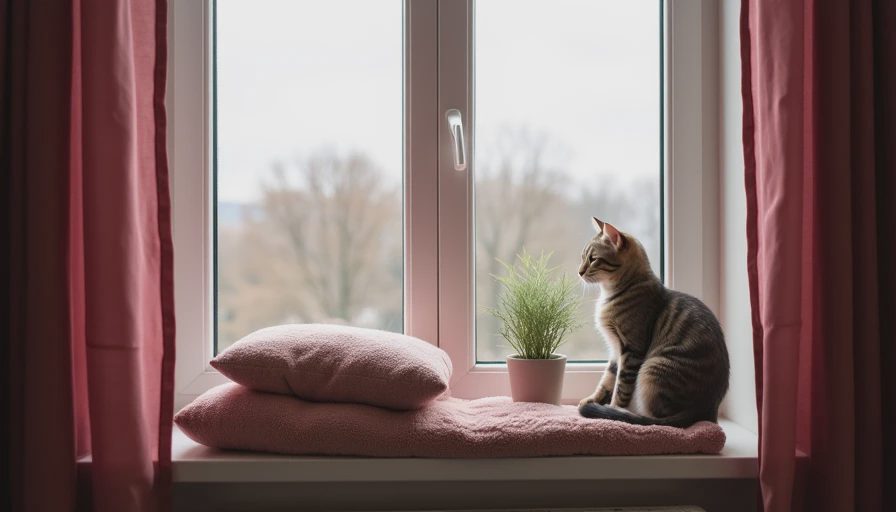
Suction cups, brackets, or a heated bed?
Suction-cup perches are usually the easiest choice for renters. They install without drilling, often cost about $25 to $60, and can move from one window to another. The K&H Pet Products EZ Mount Window Scratcher is a familiar example of the category, combining a window-mounted resting spot with scratching material. It is more useful for cats who like to stretch and climb than for a large cat who wants a wide sleeping platform.
Bracket-mounted shelves are sturdier when your lease and wall layout allow them. They typically run $40 to $100, depending on the material and size. A shelf anchored into a stud or properly rated hardware is less likely to shift than a suction-only setup, but installation matters. Drywall anchors that are too weak can turn an expensive perch into a falling object.
Heated beds deserve extra caution. Products such as K&H heated pet beds are designed for low, controlled warmth, but the cord must be protected from chewing and routed away from climbing paths. Do not use a human heating pad as a substitute. It can become too hot, and cats are very talented at sleeping through problems until they are serious.
The best cat window perch for different cats
For a confident adult cat, a wide hammock-style platform can be excellent. Look for a fabric cover that removes for washing and a frame that does not bow when pressed. Cats often knead before settling, so loose fabric and exposed stitching are invitations to destruction. I spent $42 on a hammock that Nori shredded in one afternoon because the cover felt like a deluxe scratching mat.
For kittens and foster cats, choose a lower-risk setup near the floor or beside a stable piece of furniture. A window perch should add enrichment, not create a high fall during zoomies. Kittens may also chew cords, pull strings, or climb behind the window covering, so inspect the area from their height. If you cannot see the risk while crouching on the floor, you probably have not found it yet.
For seniors, cats with arthritis, or three-legged cats, prioritize access. A sturdy ottoman, cat tree platform, or low step can create a staircase to the window. The best cat window perch for an older cat is the one they can reach without jumping from a slippery surface. A fleece cover helps with comfort, but traction underneath matters more than decorative padding.

I spent $X so you do not have to
My testing budget has included a $19 bargain perch, a $38 midrange hammock, and a $74 wooden shelf. The bargain model looked fine in the package but twisted when Miso stepped onto one corner. The hammock held securely but collected hair and required frequent washing. The wooden shelf was the winner for stability, although its thick cushion reduced the available sleeping space more than expected.
That comparison taught me to calculate usable room, not advertised dimensions. A platform listed as 22 inches wide may lose several inches to a raised edge or sagging cover. Measure your cat curled up, then add at least a few inches for turning and stretching. For a 14-pound cat, I would rather see a simple 24-inch shelf with solid support than a tiny designer perch with a dramatic product photo.
Price is also tied to replacement parts. Some K&H designs offer replacement covers, which can be cheaper than replacing the whole unit. Generic suction cups and clips are not always interchangeable, so photograph the hardware and save the instructions. A $50 perch that lasts three years can be a better buy than a $20 perch replaced every six months.
A five-minute installation and inspection checklist
Clean the glass with rubbing alcohol or a residue-free cleaner, then let it dry completely. Attach each suction cup according to the instructions rather than improvising with extra water or oil. Press out air pockets and wait the recommended amount of time before allowing your cat to use the platform.
Next, test it with your hands. Push down at the center, then apply pressure to each corner. Watch for twisting, creaking, sliding, or a bracket pulling away from the wall. Add weight gradually with books before introducing a cat. This does not guarantee safety, but it catches obvious failures without involving a startled animal.
Place the perch away from dangling blind cords, open windows, hot radiators, and unstable furniture. Cordless window coverings are the safer choice because looped cords can pose a strangulation hazard. Keep the cover clean, trim loose threads, and inspect the mounting points monthly. If your cat suddenly avoids the perch, investigate instead of assuming they are being mysterious. Cats notice wobbling long before we do.
Is the best cat window perch worth it?
Usually, yes, if your cat already spends time watching birds, squirrels, delivery drivers, or one specific leaf that has personally offended them. A window view provides visual enrichment, and a dedicated platform can keep paws off a fragile sill. It can also give a foster cat a predictable place to observe a new room without hiding under the bed all day.
But no perch is mandatory. A secure cat tree near the window, a padded shelf, or a folded blanket on a stable cabinet may work just as well. The best cat window perch is the one that your cat uses safely and that you can maintain without resentment. Start with the window measurements, your cat’s mobility, and the support system. Then choose the simplest product that meets those needs.
If you are comparing options today, skip the dramatic marketing photos and inspect the mounting method first. A $30 perch with reliable support can beat a $90 novelty bed. Give the installation a careful test, watch the first few uses, and adjust the setup when your cat gives you feedback in the form of hesitation, wobbling, or enthusiastic destruction.
Your cat, your rules.


Letters
No letters yet. Yours could be the first.