Case file: Dumpling, calico, approximately two years old, history of eating anything green and several things that absolutely were not. She once pulled an entire spider plant off a shelf while maintaining direct eye contact. That was the week I started testing the best cat grass seeds instead of assuming every little bag labeled “cat grass” was equally useful. Spoiler: it is not.
Cat grass usually refers to edible cereal grasses such as wheat, oat, barley, or rye. It is not the same thing as grass clippings from outside, and it should not be treated as a replacement for balanced cat food. For indoor cats, though, a clean pot of young grass can offer enrichment, texture, and something safe to nibble. After eight years of fostering more than 40 cats, I have learned that the best cat grass seeds are the ones that sprout reliably, stay fresh, and do not turn into a damp science experiment on your windowsill.
What makes the best cat grass seeds worth buying
The first thing I check is the seed type. Wheatgrass is usually the easiest starting point because it germinates quickly and produces a dense, tender patch. Oat grass tends to grow soft and tall, which appealed to Nori, my former foster who approaches new foods like a suspicious food critic. Barley can be vigorous and upright, while rye may be a useful option when you want a slightly different texture. None is automatically perfect for every cat.
Look for seeds sold specifically for sprouting or pet-safe indoor growing. The package should identify the plant and avoid vague wording such as “premium lawn blend.” Lawn seed can contain coated seed, treatment chemicals, or species that are not intended for cats to chew. Organic labeling can be reassuring, but it does not eliminate the need to grow the grass cleanly. A certified organic bag can still become moldy if it sits in water for a week.
I also prefer a plain seed packet without added fertilizer, dyes, or mystery treatments. The best cat grass seeds should come with basic growing instructions, a reasonable expiration date, and enough information to tell you whether the seeds are wheat, oat, barley, or rye.
My indoor growing test, minus the dramatic failure
My first attempt involved a decorative ceramic bowl, too much water, and the confidence of someone who had never met root rot. Five days later, the bowl smelled like a wet basement and Miso refused to walk within three feet of it. The lesson cost me $18 for the planter and one deeply judgmental orange tabby.
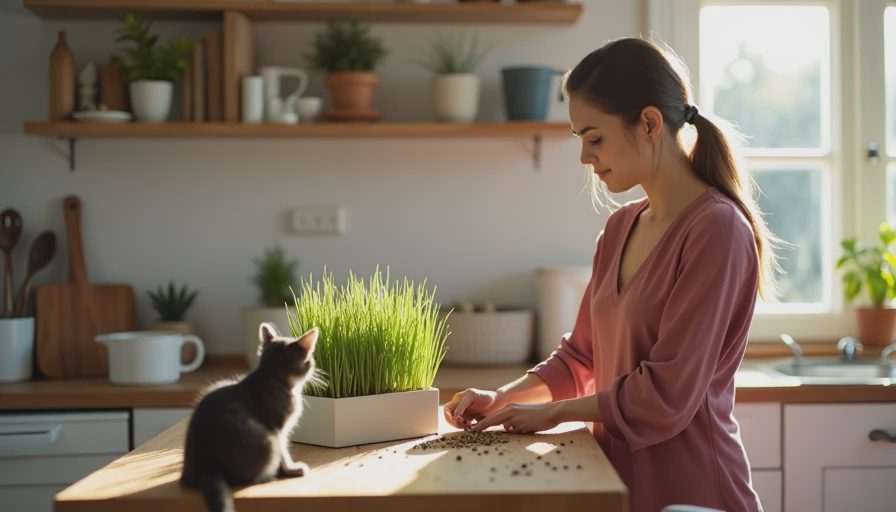
Now I use a shallow container with drainage holes, a saucer, and ordinary untreated potting soil. I soak the seeds only if the package recommends it, then spread them over damp soil and cover them lightly. The container goes somewhere bright but not scorching, such as a sunny window with filtered light. I keep the soil moist, not swampy, using a small cup or spray bottle rather than dumping water over the top.
Most cat grass becomes interesting to cats when it is several inches tall and still bright green. I put the pot on a washable tray because cats are excellent at pulling up an entire clump and leaving the soil beside it. If your cat immediately digs instead of grazes, that is not a growing failure. It is simply a cat demonstrating that gardening is a contact sport.
Wheat, oat, barley, or rye: which seed should you choose
For a first try, wheat is my practical default. It usually fills a small pot quickly and creates a sturdy patch that can survive enthusiastic nibbling. Oat grass is softer and can be appealing to cats that dislike coarse blades. Barley can grow tall and full, but tall grass is also easier for a determined cat to flatten. Rye is worth trying when your cat ignores the usual wheat or oat offering.
The best cat grass seeds for your household depend on the individual cat, not an internet ranking. In my apartment, Miso likes wheat, Dumpling prefers oat, and Nori sometimes sniffs all of it before chewing a cardboard box instead. If you have multiple cats, grow two small pots with different seed types rather than buying one large bag and hoping everyone agrees. A $4 experiment is cheaper than a $25 decorative kit that nobody uses.
The mold problem nobody puts on the cute packaging
Mold is the reason I stopped crowding seeds together like I was trying to grow a tiny lawn in a thimble. Dense planting, poor drainage, stale air, and constant moisture create the conditions mold enjoys. Fuzzy white growth, a sour smell, slimy soil, or discolored blades means the pot goes into the trash. I do not scrape off the top and hope for the best, especially with kittens or cats who already have sensitive stomachs.
The best cat grass seeds cannot rescue an overwatered setup. Use a clean container, fresh soil, and a pot that drains. Rinse the container between batches, wash your hands after handling moldy soil, and do not let a cat chew grass treated with pesticides, herbicides, fertilizer, or household cleaners. Outdoor grass near roads and sidewalks is also a poor substitute because you cannot reliably know what has been applied to it.
How long a pot should stay available
A cat grass pot is not a permanent houseplant. Once it becomes yellow, flattened, smelly, or heavily chewed, I replace it. Under ordinary indoor conditions, a small pot may stay presentable for roughly one to two weeks, although a gentle grazer can stretch that longer. I usually start a second pot several days after the first so there is a fresh replacement ready instead of a sad emergency trip to the store.
Watch how your cat reacts. A little nibbling is different from repeatedly eating large amounts, vomiting, or developing diarrhea. Grass can trigger vomiting in some cats, and persistent symptoms deserve a call to your veterinarian. If your cat eats plants compulsively, loses interest in normal food, or seems unwell, grass is not the solution to investigate alone.
What I spent so you do not have to
My simplest setup costs about $10 to $15: a packet of seeds, a small plastic pot, a saucer, and a little potting soil. Ready-made cat grass kits often cost around $8 to $20 and can be convenient, especially for a first attempt. The tradeoff is that some kits include tiny containers with weak drainage or a compressed growing medium that stays wet longer than expected.
For foster kittens, I use inexpensive washable containers rather than ceramic. They are harder to break during a midnight zoomie and easy to sanitize between litters. For my permanent cats, I keep one plain nursery pot on a tray and skip the decorative markup. The cats have never praised my aesthetic choices. They have, however, knocked over every beautiful planter I have owned.
When comparing the best cat grass seeds, calculate the cost per batch, not just the front-of-package price. A larger packet can be a better deal if you store it sealed, dry, and away from heat. If you only have one cat who takes three bites and walks away, a small packet makes more sense.
My final pick for a first-time grower
Start with untreated wheat or oat seeds labeled for cat grass, a shallow draining pot, and a modest amount of soil. Grow one small batch, observe your cat, and adjust from there. The best cat grass seeds are not the fanciest ones; they are the safe, clearly labeled seeds that you can grow without creating a mold farm beside the coffee maker.
I spent too much money learning that lesson, including the ceramic bowl, the overwatered kit, and one bag of seeds that produced more fungus than grass. Your cat may love wheat, ignore oat, or treat the whole project as a digging box. That is useful information, not failure. Your cat, your rules.


Letters
No letters yet. Yours could be the first.