Case file: adult cat, usually food-motivated, suddenly turns down breakfast while continuing to patrol the apartment like nothing happened. That is the exact moment many of us search cat not eating but acting normal and start imagining every expensive diagnosis at once. I have been there with foster cats, my own three, and one spectacularly stubborn orange tabby who treated a full bowl like a personal insult.
The short version is that one missed meal is not always an emergency, especially if your cat is bright, comfortable, drinking, and using the litter box. Cats can skip food because of stress, a changed recipe, mild nausea, dental pain, or a bowl placed somewhere they dislike. The important part is watching the timeline and looking for small changes hiding behind the performance of “I am completely fine.”
Why a cat may refuse food while acting normal
Cats are excellent at concealing illness. That survival instinct is useful in the wild and deeply unhelpful in a living room where their guardian is trying to decide whether to call the vet. A cat not eating but acting normal could be dealing with something minor, such as a new bag of food, a noisy appliance near the feeding area, competition from another cat, or a stressful visitor.
Food can also smell different even when the label looks identical. Manufacturing batches, storage conditions, and a slightly stale odor can turn a familiar meal into a hard pass. Wet food served straight from the refrigerator is another common rejection. Most cats prefer food closer to room temperature because it smells stronger.
More concerning possibilities include dental disease, mouth injury, nausea, constipation, kidney disease, pancreatitis, infection, or a swallowed object. A cat with mouth pain might approach the bowl, sniff, and walk away. A nauseated cat may lick its lips, swallow repeatedly, or sit near food without taking a bite. Acting normal does not rule those problems out; it only tells you that the cat is not yet showing dramatic symptoms.
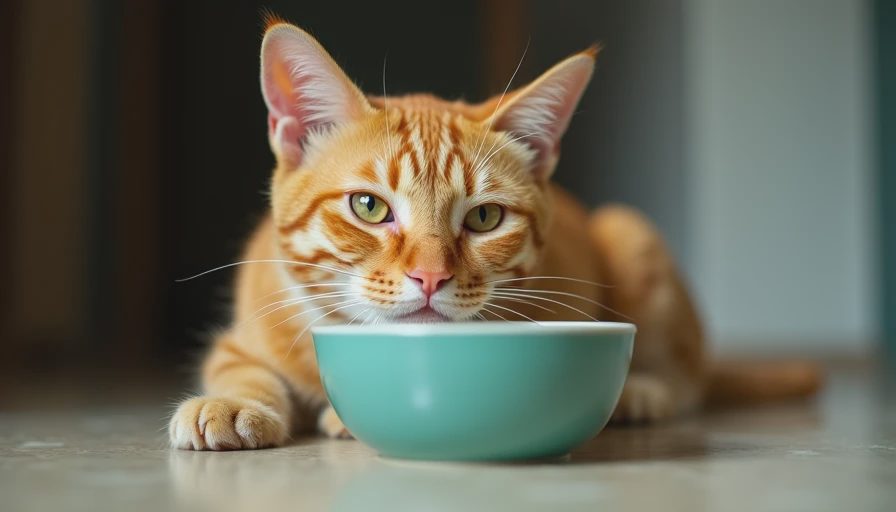
What to check during the first 24 hours
Start with a simple log instead of relying on memory. Write down when your cat last ate a normal portion, how much water went down, whether urine and stool appeared in the litter box, and any vomiting or diarrhea. In a multi-cat home, temporarily separate the cat with its own food, water, and litter box so another pet cannot quietly eat the evidence.
Look at the mouth only if your cat allows it safely. Do not force the jaw open or put your fingers deep inside. Red gums, drooling, blood, a foul odor, or obvious swelling deserve a veterinary call. Check the food itself for a changed smell, dry texture, mold, or an expired date. Offer the usual favorite first rather than presenting a buffet of ten new foods.
You can try a small portion of familiar wet food warmed gently, not hot. A teaspoon is enough to test interest. Feed in a calm room using a clean, wide dish; some cats dislike whiskers touching deep bowls. If your cat eats a little and keeps it down, continue with small portions rather than immediately serving a large meal.
If your cat is otherwise comfortable, one missed meal can be observed closely. If the question is cat not eating but acting normal after a full day, I would stop treating it as a quirky breakfast preference and contact the regular veterinarian for guidance.
I spent $0 before trying the obvious fixes
My first instinct used to be buying something. I have purchased novelty toppers, a ceramic “whisker-friendly” bowl, and a $30 variety pack that made three cats look at me as if I had betrayed the household. The useful fixes were much less glamorous.
First, restore routine. Serve the normal food at the normal time in the normal location. Remove leftovers after about 20 to 30 minutes so the feeding area stays clean and predictable. Next, reduce pressure. Standing over a cat and whispering “please eat” is emotionally understandable but often makes a cautious animal leave faster. Sit several feet away or leave the room.
For a cat who prefers wet food, warming a portion slightly can release more aroma. For a cat who eats dry food, check whether the bag has been open long enough for the smell and texture to change. Do not suddenly switch to milk, rich table scraps, raw meat, or human medication. Those experiments can cause digestive trouble and make it harder to identify the original problem.
In a foster room, I also inspect the environment. A new litter brand, a recently moved food station, a barking dog next door, or tension between cats can shut down appetite. Fixing the stressor sometimes works within a few hours, but improvement should still be recorded rather than assumed.
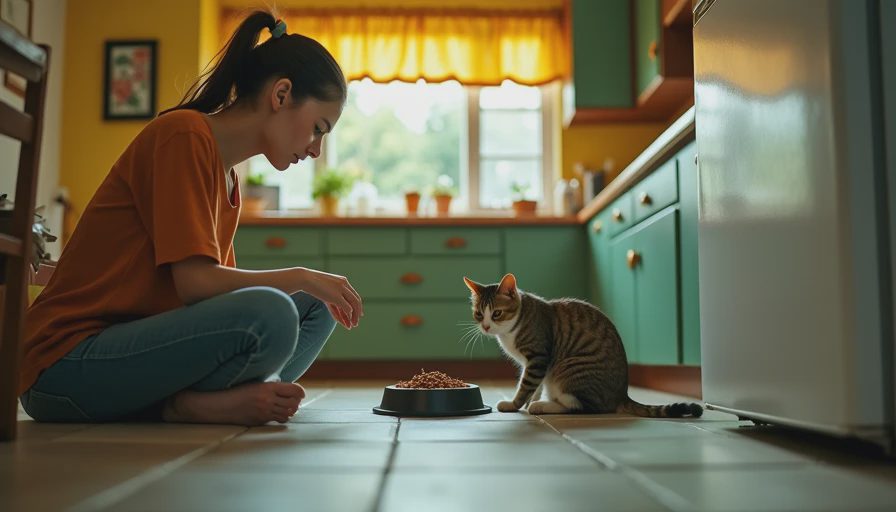
When a skipped meal becomes urgent
Call a veterinarian promptly if your cat has not eaten for roughly 24 hours, sooner if the cat is a kitten, senior, pregnant, diabetic, medically fragile, or already under treatment. Cats that eat too little for too long can develop hepatic lipidosis, also called fatty liver disease. Overweight cats are particularly vulnerable when they stop eating, so “there is plenty of body fat” is not reassuring.
Seek urgent or emergency care for repeated vomiting, trouble breathing, collapse, severe weakness, a painful or swollen abdomen, pale or yellow gums, inability to urinate, blood in vomit or stool, or suspected toxin or foreign-object ingestion. A male cat repeatedly visiting the litter box without producing urine needs emergency attention; urinary blockage can become life-threatening.
The phrase cat not eating but acting normal can create false reassurance, especially when a cat still purrs, follows you, or begs for treats. Treat those behaviors as useful clues, not proof that everything is fine. Cats can continue familiar routines while a medical issue develops underneath.
When you call, give the clinic concrete information: last normal meal, current food, water intake, litter box output, vomiting, medications, recent household changes, and whether the cat could access string, plants, chemicals, or human food. A clear timeline helps the veterinary team triage the situation quickly.
A practical decision path for cat guardians
If your cat skips one meal but is alert, drinking, comfortable, and using the litter box normally, offer familiar food again after a short break and monitor closely. If the cat eats a small amount, keep portions modest and continue tracking intake. If food is refused repeatedly, call your veterinarian rather than cycling through increasingly rich toppers.
If there are stress clues, give the cat a quiet room and separate resources. Each cat should have a safe feeding area where another animal cannot stare, crowd, or steal food. In my three-cat apartment, this sometimes means feeding one cat on the bathroom counter, one behind a closed door, and one in the kitchen. Elegant? No. Effective? Usually.
If the problem follows a food change, return to the previously accepted diet if it is safe and available, then discuss a gradual transition with your veterinarian. If dental pain seems possible, skip crunchy treats and arrange an exam. Do not syringe-feed or force-feed without veterinary instruction; aspiration and additional food aversion are real risks.
When cat not eating but acting normal lasts into the next day, the safest move is professional advice, not internet detective work. Your veterinarian can decide whether your cat needs an examination, dental evaluation, bloodwork, imaging, or simply continued observation.
The takeaway from the foster-room floor
A normal-looking cat is encouraging, but appetite is health information. One missed meal can come from a stale dinner, household stress, or a bowl with terrible design. Persistent refusal can signal pain or illness long before your cat looks obviously sick.
Make the feeding area calm, offer familiar food, record the facts, and set a firm time for calling the vet. In a multi-cat home, separate the animals so you know who actually ate. Never punish, force, or shame a cat for refusing food; that only turns a medical clue into a bigger behavior problem.
If you are searching cat not eating but acting normal tonight, take a breath and start the log. Your cat, your rules—but when the appetite does not return, let your veterinarian help write the next part of the case file.

Letters
No letters yet. Yours could be the first.