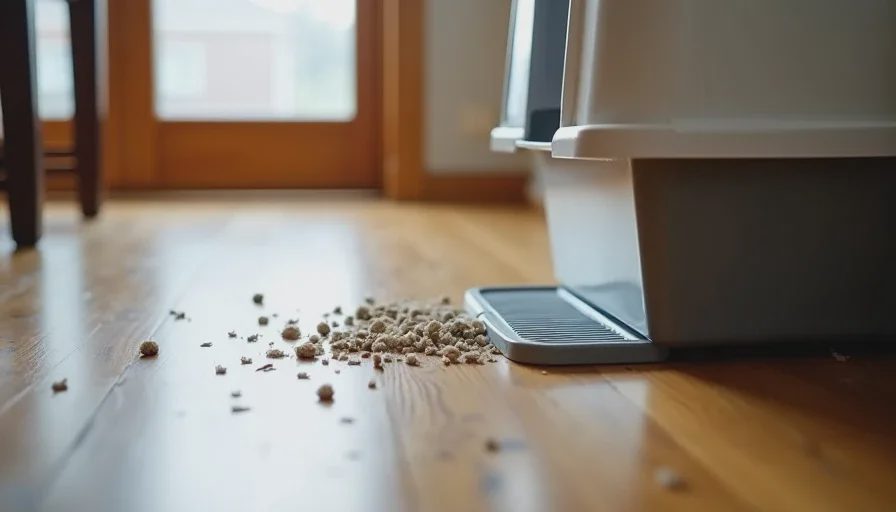
I wanted to stop scooping.
Three cats produce a steady volume of waste. Even with four regular boxes and twice-daily scooping, the chore never felt finished. Online ads promised a solution: an automatic self-cleaning unit that would sense when a cat left, wait a few minutes, then rake or rotate the mess into a sealed drawer. No more daily scooping. Just empty the drawer every few days and live like a person with free time.
I spent just over $200 on a mid-range model that claimed it worked for multi-cat homes. It arrived in a box the size of a small appliance. Setup took an hour. I filled it with the required clumping litter, plugged it in, and waited for the future to begin.
Dumpling treated it like a new sandbox within forty-eight hours.
The First Week of Optimism
Miso investigated once, stepped in, and left. Nori refused to go near it. Dumpling, however, was delighted. She climbed in, dug with both front paws like she was excavating for treasure, kicked litter over the sides, then sat in the middle and stared at me. When the unit finally cycled after she left, the mechanical whir startled her so badly she bolted and did not return for two days.
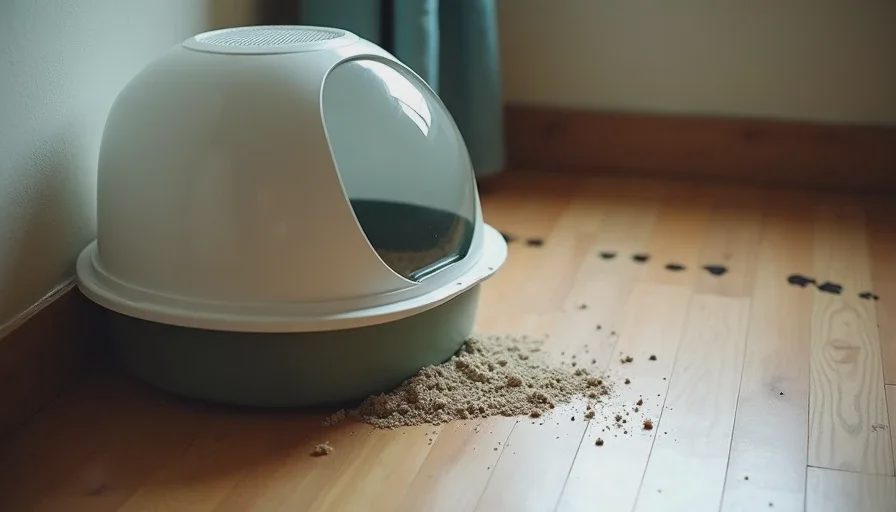
I kept the old open boxes available because every guide said to transition slowly. That was the correct advice. It also meant I was still scooping the old boxes while simultaneously dealing with litter tracked across the floor from the new machine and a drawer that filled faster than expected once Dumpling decided the spinning globe was entertainment.
The unit did remove clumps when a cat used it properly. The problem was that “properly” required the cat to enter, eliminate, and leave without turning the interior into a construction site. Dumpling has never met a surface she could not improve by digging.
What Actually Went Wrong
Noise. Even the “quiet” cycle is loud to a cat. The first time it activated while Nori was in the next room, she fled under the bed and stayed there for hours. After that she avoided the entire corner of the apartment.
Size and entry. The opening felt smaller than a standard open box. Miso, the largest of the three, had to duck. He started using the regular boxes exclusively again.
Litter requirements. The machine needed a specific type and depth of clumping litter. Too much and the sensors complained. Too little and the rake or globe could not clear properly. Lightweight or crystal litters were out. I was locked into one product line and still buying regular litter for the backup boxes.
Maintenance reality. The sealed drawer still needed emptying every two to three days with three cats. The interior walls collected residue that required periodic deep cleaning. Sensors occasionally threw false “full” or “pinch” errors. One afternoon the unit simply stopped mid-cycle and needed a full reset. I spent more time troubleshooting an appliance than I had ever spent with a basic scoop.
Tracking. The high-sided design was supposed to reduce scatter. In practice Dumpling’s enthusiastic digging sent litter out the entrance and onto the floor in a wider radius than any of my open boxes.
I kept the machine for six weeks because I had spent the money and wanted it to work. By week four only Dumpling still used it, and mostly as a playground. The other two had fully returned to the open boxes. I unplugged it, cleaned it thoroughly, and listed it for sale at a loss.
The Honest Math
Purchase price: $200+
Specialized litter during the trial: another $40
Time spent cleaning sensors, emptying the drawer, and sweeping tracked litter: more than the old scooping routine
Result: zero reduction in daily work and one extra large object taking up floor space
The open boxes I already owned continued to function exactly as before. Scooping takes a few minutes. The boxes cost under $30 each and last for years. They do not require electricity, firmware updates, or a specific brand of litter.
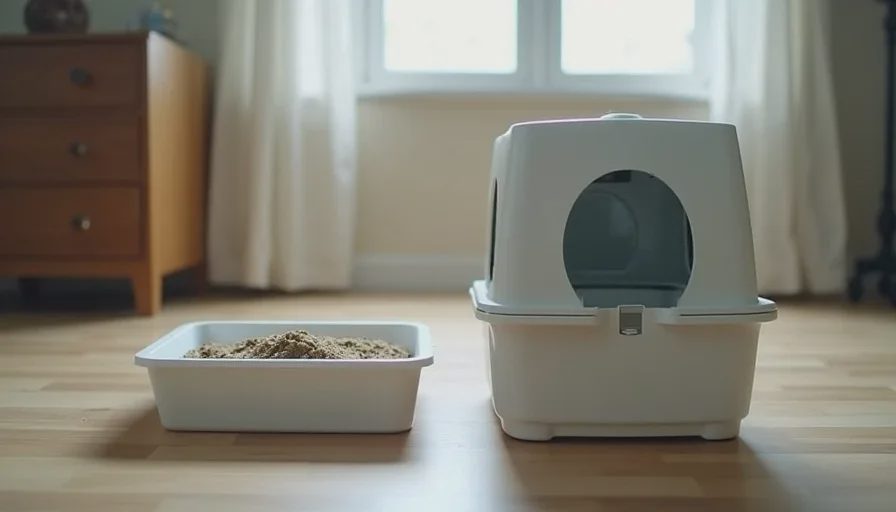
I am not against automatic litter boxes in every situation. Some single-cat households with quieter, less dig-oriented cats report genuine relief. Some models have improved sensors and quieter motors. If you have mobility issues that make daily scooping difficult, the trade-offs may be worth it. In a three-cat apartment with one chaos gremlin and two cats who prefer predictable open spaces, the machine solved a problem I did not actually have and created several new ones.
What I Use Instead
Four large, uncovered storage-bin style boxes. Unscented clumping litter. A basic metal scoop. Daily (sometimes twice-daily) scooping. Weekly full changes. The total ongoing cost is litter and a few minutes of my time. No motors. No error codes. No startled cats.
The expensive lesson was simple: convenience products designed for human preferences often ignore what cats actually prioritize. Quiet. Predictable texture. Easy entry and exit. Enough space to dig and turn. A machine that moves, makes noise, and restricts the interior will always be fighting against those preferences.
I still walk past the corner where the self-cleaning unit used to sit and feel a small wave of secondhand embarrassment. Dumpling, for her part, has moved on to other projects. The last time I saw her fully committed to excavation was inside a cardboard box that cost nothing and required no assembly.
Your cat, your rules. And sometimes the cheapest version is the one that actually works.
No notes yet — write the first one.