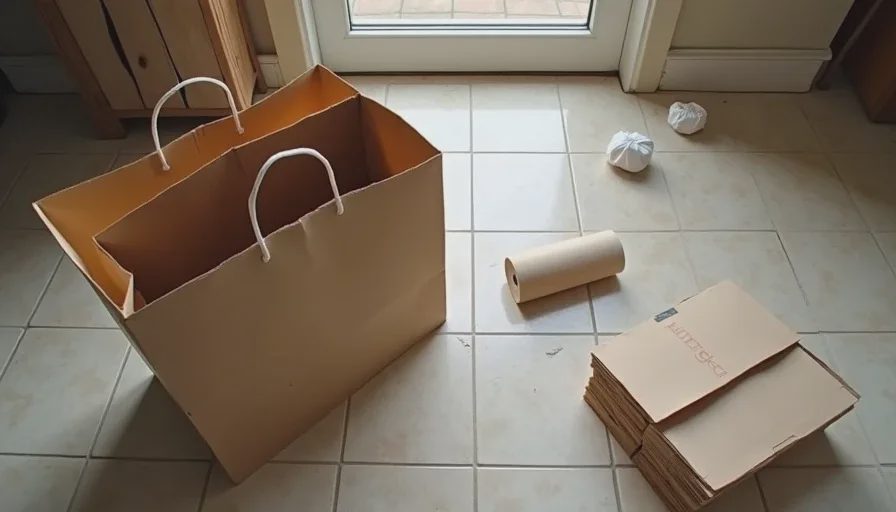
After the self-cleaning litter box experiment, I stopped assuming that better enrichment required better spending. Most of the toys and puzzles that actually get used in this apartment started as something headed for the recycling bin.
Cats do not need novelty that costs thirty dollars. They need novelty that changes the environment slightly, engages hunting or foraging instincts, and can be replaced when it is destroyed. Cardboard and paper excel at all three. Below are five setups that have worked here with zero additional purchases. Each one can be assembled in under five minutes.
Five DIY toys to stimulate a cat's instincts
1. The Open Box Array
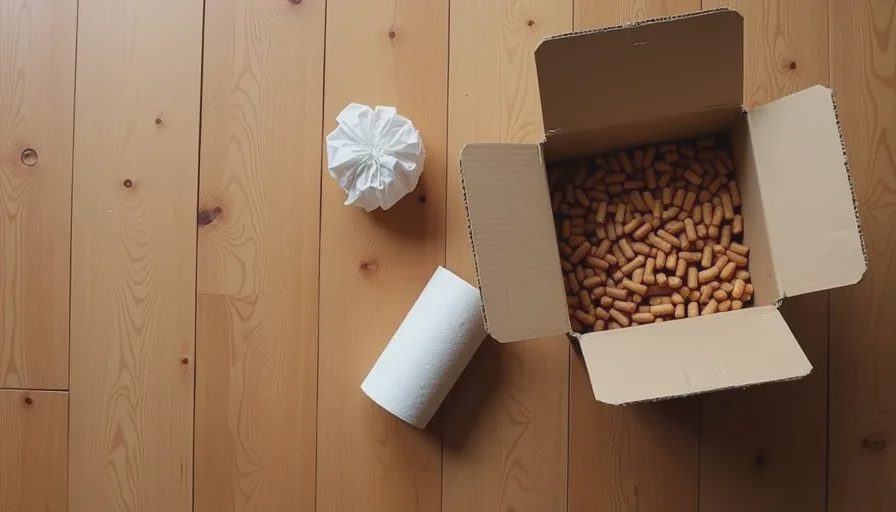
Take any clean cardboard shipping box. Remove tape and staples. Place it on its side or upside down with one or two entry holes cut in the sides. If you have several boxes, nest or offset them to create multiple chambers.
Why it works: Boxes provide cover, elevated edges for perching, and a defined space the cat can control. Adding a few pieces of kibble inside turns it into a low-effort foraging station.
Variations that lasted longer than a day:
Cut additional small holes so a wand toy can be poked through from the outside.
Leave packing paper loosely crumpled inside for digging.
Rotate the orientation every few days so the “new” box feeling returns.
Safety note: Always remove plastic tape, shipping labels with adhesive, and any staples. Supervise the first sessions if your cat is a heavy chewer.
2. The Handle-Free Paper Bag Tunnel
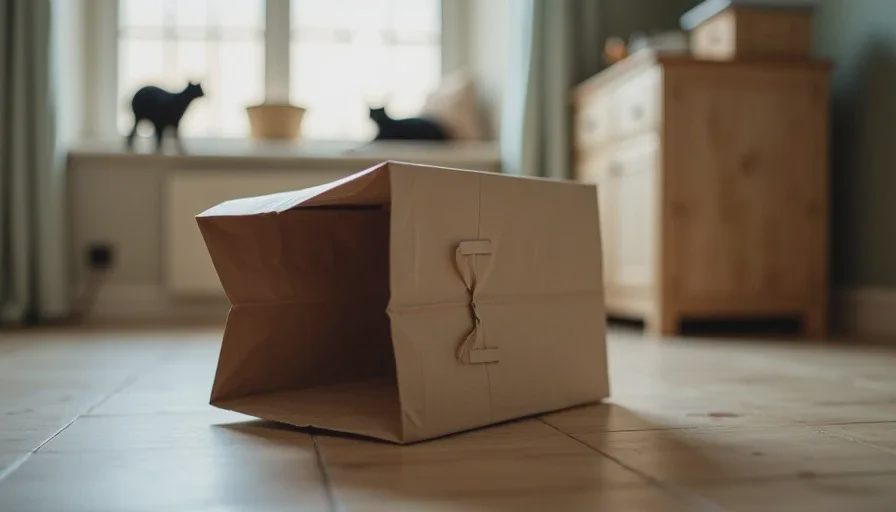
Paper grocery bags are reliable. Cut the handles off completely so there is no risk of a head or leg getting caught. Open the bag and place it on its side. For a longer tunnel, cut the bottoms out of two bags and nest them.
Cats use these for ambush practice, short rests, and dramatic exits. The sound of the paper adds sensory interest without electronic parts or batteries.
If the bag collapses too easily, open it over a light cardboard frame or simply replace it when it is flattened. Cost remains zero.
3. Toilet-Paper-Roll Foraging Tubes
Empty toilet-paper or paper-towel rolls are the most versatile free item in the house.
Basic version: Fold one end closed, drop in a few pieces of dry food or a single treat, fold the other end closed. The cat has to roll, bat, or tear to reach the food.
Slightly more involved: Stand several rolls upright inside a shallow box or tray and scatter kibble among them. The cat has to reach or knock the rolls over.
Advanced but still free: Cut small holes in the sides of a single roll, add food, and leave the ends open. It becomes a rolling puzzle that dispenses as it moves.
These are single-use or short-term by design. When the cardboard is shredded, it goes back into the recycling. No guilt.
4. Crumpled Paper Balls and Scatter
Take clean packing paper, newspaper (soy-based ink is preferable), or the paper that comes in shipping packages. Crumple into loose balls of different sizes. Toss a few across the floor or hide them partially under a rug edge or inside an open box.
The sound and unpredictable movement trigger chase responses in many cats. Some prefer to dissect the paper rather than chase it. Both are valid enrichment.
For a longer session, scatter a small portion of the daily kibble ration across a clear floor area mixed with a few paper balls. The cat has to search and discriminate. This is especially useful for food-motivated cats who finish meals too quickly from a bowl.
5. The Shallow Box Dig and Scratch Tray
Take a low-sided cardboard tray or the bottom half of a larger box. Fill it loosely with crumpled paper, leftover packing material, or strips of cardboard. You can also layer flat pieces of corrugated cardboard on edge to create a simple scratch surface.
Cats dig, rearrange, scratch, and sometimes nap in these. It satisfies the same urges that expensive dig boxes and cardboard scratchers target, without the price.
When the cardboard is thoroughly shredded or soiled, discard and replace. The supply is continuous as long as packages arrive.
Quick Safety Rules for Everything Above
No string, ribbon, rubber bands, or plastic that can be swallowed.
Remove all tape, staples, and adhesive labels.
Supervise initial use, especially with new or destructive cats.
Replace items once they are heavily damaged or dirty.
Avoid anything with strong chemical smells, glossy coatings, or unknown inks.
Why This List Beats Most Store Kits
Commercial enrichment toys are often designed to look appealing to humans and to survive marketing photography. Many end up ignored after the first day. Cardboard and paper are already interesting to most cats because of texture, sound, and the way they respond to claws and teeth. When the item is destroyed, the next one is free.
I keep a small stack of clean boxes and a bag of paper and rolls near the recycling area. When a foster arrives or the resident cats seem restless, I pull from that stack instead of opening a shopping app. The setups are not permanent fixtures. They are temporary changes to the environment, which is exactly what most indoor cats need.
You do not need a special budget line for enrichment. You need a slightly slower path to the recycling bin and five minutes to cut a few holes or fold a few ends.
Your cat, your rules. And sometimes the best toys are the ones that were already in the house.

Letters
No letters yet. Yours could be the first.