Intake details: three cats, one Portland apartment, and a history of knocking over every water bowl I have ever owned. When I started testing the best cat water fountain options, Miso was recovering from a rough foster-kitten past, Nori distrusted anything with a motor, and Dumpling treated fresh water like an invitation to play hockey. So this is not a list assembled from five minutes of reading product pages. I spent real money, cleaned real filters, and watched three very opinionated cats decide which fountains deserved floor space.
The right fountain can encourage drinking, reduce the daily bowl-slime situation, and help in a multi-cat home. It cannot magically make a cat drink on command. Some cats prefer a wide ceramic dish, and that is perfectly fine. Your cat, your rules.
What I Look For in the Best Cat Water Fountain
My first requirement is easy cleaning. If a fountain has six tiny channels, a hidden impeller, and a filter chamber shaped like a puzzle piece, it will eventually become a science project. I want the main basin to come apart without a screwdriver and the pump to lift out for rinsing. A dishwasher-safe top is useful, but I still hand-wash pump parts because food film and cat hair love hiding around the intake.
Noise comes next. A faint hum disappeared under my refrigerator noise; a high-pitched whine sent Nori under the bed. Stainless steel and ceramic are usually better choices than soft plastic if you are trying to limit scratches, lingering odors, or a greasy surface. Plastic is not automatically bad, but it needs frequent washing and replacement when it becomes cloudy or deeply scratched.
Capacity matters less than you think. A 2.5-liter reservoir does not mean you can ignore it for two weeks. Evaporation, hair, dust, and three tongues change the math quickly. In my apartment, a fountain that held around 80 ounces gave us several comfortable days, not a vacation excuse.
The Models I Would Actually Consider
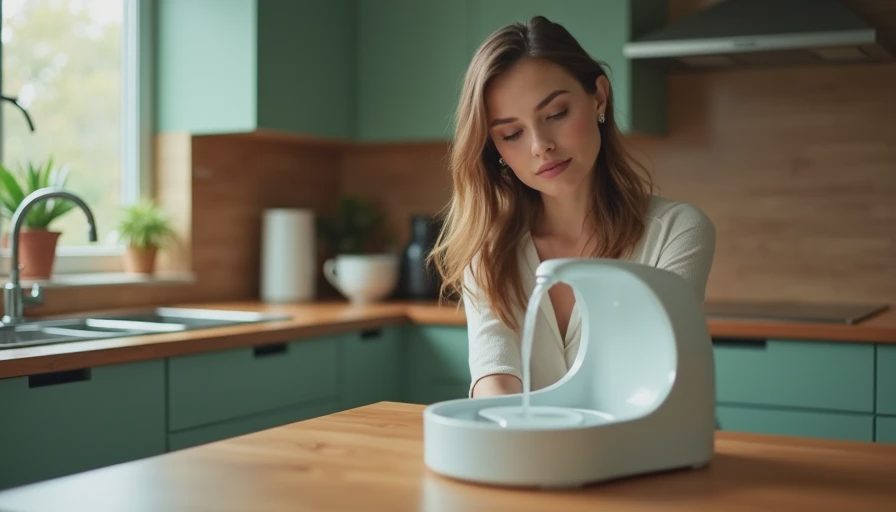
The Catit Flower Fountain is a common starting point because replacement filters are easy to find and the flower insert lets you adjust the water stream. It is lightweight plastic, so I would not call it the forever fountain for a determined countertop wrestler. Still, it is simple to disassemble, generally affordable, and useful for a cat who likes moving water. Dumpling understood the assignment immediately and drank from it before I had finished peeling off the packaging.
The PetSafe Drinkwell line offers several sizes and materials, including plastic and stainless-steel versions. The larger models make sense for multiple cats, while smaller versions fit apartments better. PetSafe replacement filters can add recurring cost, especially when you follow a monthly replacement schedule. The pump design is familiar and parts are relatively easy to locate, which matters when a tiny impeller disappears beneath your sofa at 11 p.m.
For a quieter, more furniture-friendly setup, the Pioneer Pet Raindrop Ceramic Fountain is worth a look. Ceramic is heavier and less likely to skid across the floor, although it can chip if dropped. It also costs more up front than basic plastic models. In my experience, the best cat water fountain is often the one that stays in place and can be scrubbed thoroughly, not the one with the fanciest LED light.
I Spent $X So You Do Not Have To
My first fountain cost about $30, and replacement filters ran roughly $10 to $15 for a multipack. That was reasonable, but the pump became louder when I skipped cleaning it for too long. The second setup cost closer to $55 because I chose a heavier ceramic model. It looked better, stayed put, and took longer to clean because the ceramic pieces were awkward in my small sink. Naturally, the cat who needed a stable fountain preferred the cheaper one.
A realistic first-year budget is about $35 to $90 for the fountain, plus $15 to $45 for filters and replacement pump parts. Some fountains use washable mesh filters or no charcoal filter at all, which lowers ongoing cost but does not eliminate cleaning. Put a recurring filter reminder on your calendar. “I will remember later” is how a water fountain turns into a beige biofilm exhibit.
Before buying, price the replacement parts. Search for the exact pump and filter kit, not just the fountain name. A $25 fountain with discontinued filters is a worse bargain than a $45 model with widely available supplies. This is one reason my best cat water fountain shortlist favors boring, established designs over mystery gadgets.
How to Set Up a Fountain Without Scaring Your Cat
Do not place a brand-new humming machine directly beside the food bowl and expect applause. Start with the fountain unplugged and empty near the old water dish. Let your cat investigate it for a day. Then fill it and leave the pump off if the design allows that. Once the cat accepts the object, turn the pump on during a calm part of the day.
Keep a regular bowl available throughout the transition. This is especially important with kittens, seniors, cats recovering from illness, and any cat with a history of dehydration. If a cat stops drinking, vomits, seems weak, or has other concerning symptoms, contact a veterinarian rather than trying a new fountain as a medical solution.
Use a rubber mat underneath. I learned this after Dumpling pushed a fountain across the kitchen and created a narrow indoor stream under the refrigerator. In a multi-cat home, place water in more than one location so one confident cat cannot guard the only convenient drinking spot.
Cleaning Routine That Does Not Require a Personality Change
I rinse and refill the reservoir every day or two, depending on how much debris I see. Once a week, I take apart the basin and pump. A soft brush handles the pump cover, impeller, and intake screen; a cotton swab reaches the corners. I wash removable parts with unscented dish soap, rinse thoroughly, and let everything dry before reassembly.
Filters are not magical dirt erasers. They catch some hair and particles, but they become less useful when packed with debris. Replace them according to the product instructions or sooner if they smell, look slimy, or restrict flow. If your tap water leaves mineral buildup, soak compatible parts in diluted white vinegar, rinse completely, and keep vinegar away from cats while you clean. Never mix cleaning chemicals.
A fountain should not replace ordinary observation. Check the water level, listen for a change in pump sound, and watch whether each cat is actually drinking. A silent fountain with an empty reservoir is decorative furniture.
My Practical Buying Recommendation
For a first purchase, I would choose a simple fountain with a removable pump, accessible replacement filters, a stable base, and enough capacity for your household. The Catit Flower Fountain is a sensible budget test. A PetSafe Drinkwell model is a practical choice when you want established replacement parts and multiple size options. Pioneer Pet ceramic models make more sense when stability, appearance, and easy access to the water surface matter more than the lowest price.
The best cat water fountain for your home is the one your cats use consistently and you can clean without resentment. Buy the simplest version that fits your space, keep a backup bowl nearby, and do not let a rejected gadget make you feel like you failed at cat care. I have purchased enough expensive cat equipment to furnish a tiny pet boutique. Sometimes the winning setup is a $40 fountain, a washable mat, and a cat who finally stops drinking from the bathtub.
Your cat, your rules.

Letters
No letters yet. Yours could be the first.