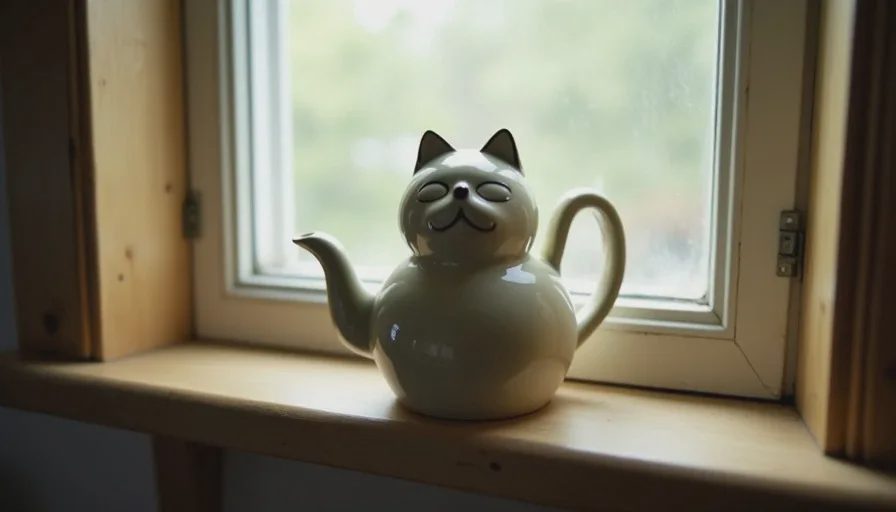
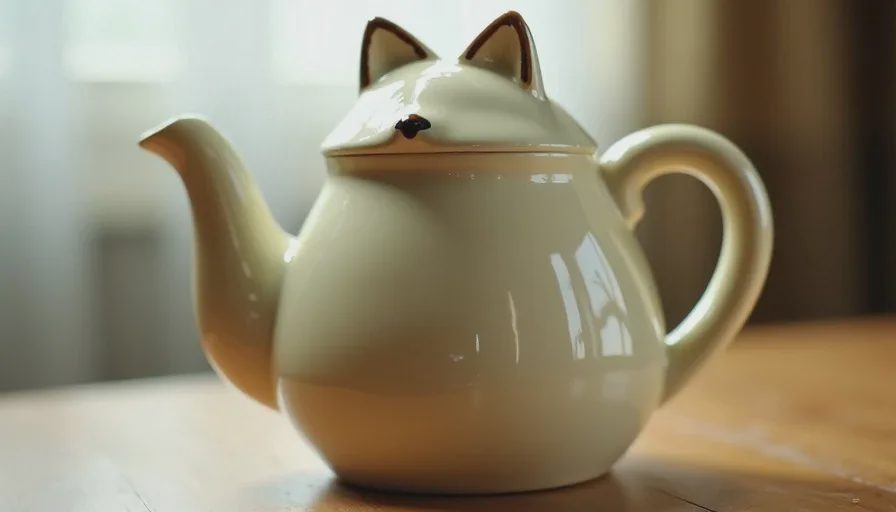
I found the teapot on a folding table in the garage of a house in Northeast Portland. The estate sale was the usual mix of mismatched glassware, outdated electronics, and boxes of things that had clearly mattered to someone and now mattered mostly as inventory. The teapot sat near the back edge of the table, slightly apart from a cluster of ordinary kitchen ceramics. It was shaped like a seated cat, the spout forming the tail, the lid a small head with painted eyes. The glaze was a soft cream with faint craquelure. One ear had a tiny chip that had been there long enough to darken slightly.
I picked it up, turned it over, and checked for a maker’s mark. Nothing clear. The price was low enough that I did not negotiate. I paid, wrapped it in newspaper from a pile near the door, and put it in the passenger seat for the drive home.
It was not the most valuable thing I have brought back from an estate sale. It was not even the most beautiful. It is the one I still think about when the subject of keeping versus releasing comes up.
Why Estate Sales Fit the Rest of the Life
Weekends often include a stop at an estate sale or a flea market. The habit started as a way to leave the apartment and look at objects that had already lived one life. Mid-century glassware, odd kitchen tools, the occasional piece of furniture that can be cleaned and used. The constraint is real: a small apartment and three cats mean that anything permanent has to earn its space. Most finds are temporary. They stay for a season or a year and then move on through donation or another sale.
The selection process is similar to the one used for foster placements. Does this object have a clear function or a clear pleasure in the current household? Can it be maintained without creating extra work? Is there room for it without displacing something that is already working? If the answers are weak, it stays on the table.
The cat teapot cleared the bar immediately. It was small. It was specific. It made me smile in a way that felt uncomplicated. I set it on a shelf in the living room where it could be seen from the kitchen doorway. Miso investigated it once, decided it was neither food nor threat, and left it alone. That was the full approval process.
The Parallel That Became Obvious
Foster work is built around temporary custody. You take in an animal that needs a defined period of care, provide what is required, and then release it to a longer-term situation. The emotional work is learning to hold something carefully without closing your hand around it permanently. Some animals stay. Most do not. The ability to do both — attach and release — is the skill the work requires.
Objects from estate sales carry a quieter version of the same pattern. Someone else chose them, used them, and eventually left them behind. For a while they sit on my shelves or in my cupboards. Then many of them leave again. The teapot has stayed longer than most. I am not sure it will stay forever. The uncertainty does not diminish the pleasure of having it now.
I used to think of collecting as accumulation. The longer I foster, the more it feels like temporary stewardship. The objects, like the cats, are not improved by being gripped too tightly. They are improved by being seen clearly, used appropriately, and allowed to move when the time is right.
What the Teapot Actually Holds
It does not get used for tea. The chip in the ear and the age of the glaze make me cautious about hot liquid and daily handling. It sits on the shelf and does the quieter work of being a specific, slightly imperfect thing that survived one household and found a place in another.
Sometimes I notice it when I am carrying a foster carrier toward the door. The visual rhyme is not lost on me: a small ceramic cat that stays, and a living cat that is leaving. The comparison is not exact. One is an object. The other is an animal with preferences and a future that no longer includes this apartment. But both involve the same underlying practice — caring for something without requiring it to remain.
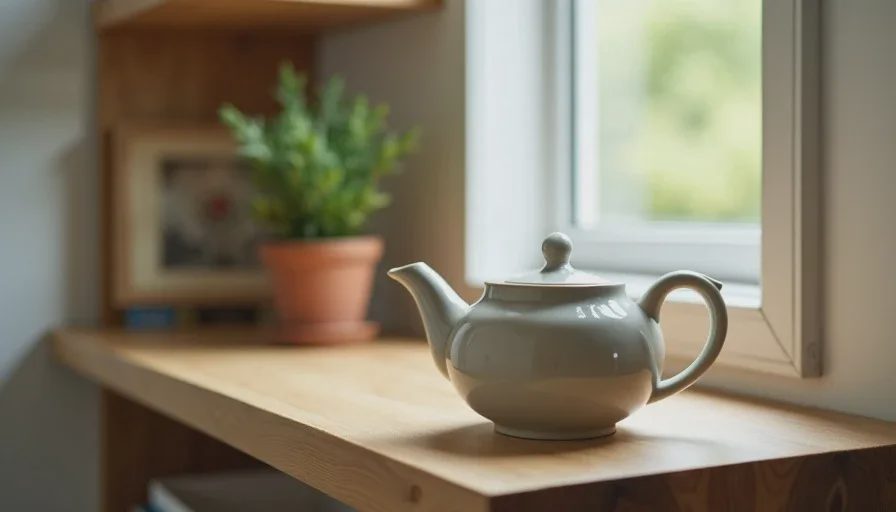
The teapot also functions as a small resistance to the idea that every surface in a cat household must be purely practical. There is room for one object that exists mainly because it is pleasing. The cats do not need it. I do not need it in any strict sense. It remains because the household can absorb a modest amount of uncomplicated liking.
Letting Go as a Repeated Practice
The foster goodbyes have made the estate-sale cycle easier. Once you have practiced releasing living animals into better situations, releasing a set of glasses or a lamp or a stack of books feels minor. The muscle is the same. You assess, you hold, you maintain, and you eventually decide that the next place is better or simply different.
Not everything should be released. The permanent cats stay. Certain tools stay. A few objects that continue to earn their space stay. The skill is in distinguishing the temporary from the lasting without turning every decision into a crisis. The teapot has not yet been asked to leave. If it ever is, the story will simply continue in another set of hands.
I still go to estate sales. I still bring things home selectively. I still pack foster carriers and drive them to their next chapter. The two practices sit beside each other more comfortably than I expected when I first started fostering. Both require attention. Both require the willingness to let the attention end.
The small cream-colored cat on the shelf is a reminder that staying and leaving can both be correct. Some things are for a while. Some things are for longer. The work is knowing the difference and acting accordingly without bitterness either way.
Your cat, your rules. And sometimes the rule is that even the keepers were once someone else’s temporary find.



Letters
No letters yet. Yours could be the first.