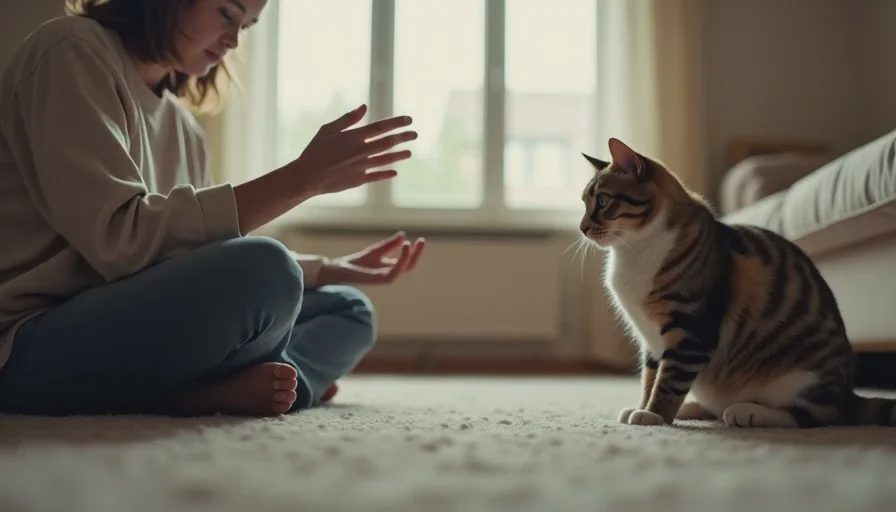
If you came from dogs, the silence can feel personal.
You call the cat’s name. Nothing. You shake the treat bag. Maybe a slow head turn. You walk into the room and the cat glances up, then goes back to staring at a wall. It is easy to decide you are being snubbed. Most of the time you are not. You are speaking two different languages and only one of you is bilingual.
Cats domesticated themselves around human grain stores roughly ten thousand years ago. They were never selectively bred for obedience or eager cooperation the way dogs were. They know their names. Studies show they can distinguish their own name from similar words and from the names of other cats in the household. Recognition does not automatically equal response. A cat hears you. It then decides whether the information is useful right now.
That decision is not spite. It is triage.
What the Body Is Actually Saying
Dogs broadcast with their whole bodies and especially their tails. Cats are subtler and more modular. You have to read several signals together instead of relying on one.
Tail
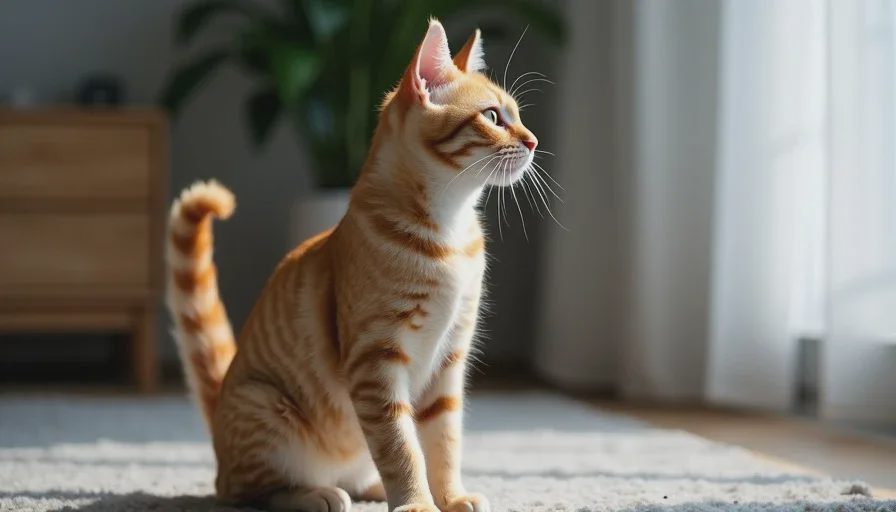
Straight up with a slight curve at the tip: confident, friendly, open to interaction.
Low or tucked: uneasy or defensive.
Fast lashing or thumping: irritated or overstimulated. This is not a wag.
Puffed: frightened or highly aroused. Give space.
Ears
Forward and relaxed: interested or content.
Swiveled sideways (“airplane ears”): uncertain or mildly annoyed.
Flattened back: frightened or ready to defend. Stop whatever is happening.
Eyes
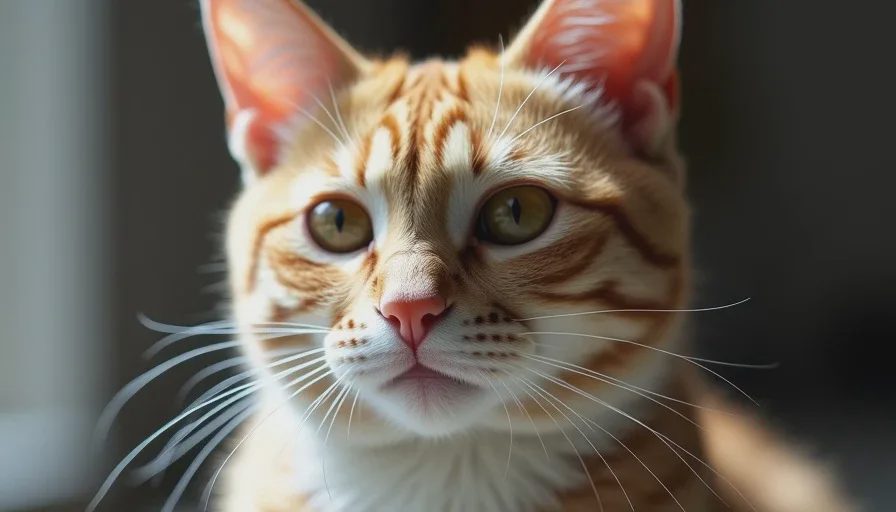
Soft, half-closed, or slow blinking: relaxed and trusting. A slow blink directed at you is one of the clearest positive signals cats give. You can blink slowly back.
Hard stare with large pupils: intense focus that can tip into threat.
Wide pupils in normal light can mean play excitement or fear depending on the rest of the body.
Overall posture
A cat lying on its side with a loose body and slow breathing is deeply comfortable. A cat showing its belly is not automatically requesting a rub; many cats feel safe enough to expose the belly but will still react if you touch it. A crouched body with weight shifted back is preparing to move away or defend.
Context matters more than any single signal. A tail flick during play is different from a tail flick while you are petting the cat’s back for the twentieth stroke.
Why the “Come” Command Rarely Works
Dogs have been shaped for thousands of years to attend to human cues and to find cooperation rewarding. Cats have not. When a cat does come when called, it is usually because the cat has learned that the sound predicts something valuable — food, a favorite toy, or access to a desired room — not because it feels a duty to obey.
You can teach a reliable recall, but the method is different. Pair the name or a specific cue with high-value rewards, practice in low-distraction settings, and keep sessions short. Even then, many cats will respond only when they feel like it. That is not failure. It is the species.
Calling a cat repeatedly while it continues to ignore you often makes the sound background noise. One clear cue, a pause, and then moving on is more effective than a string of increasingly desperate repetitions.
What Feels Like Ignoring Is Often Something Else
The cat is resting or in a low-energy phase of the day. Cats sleep a large portion of the twenty-four-hour cycle and have bursts of activity rather than steady engagement.
The cat is monitoring the environment. Sitting still and watching is productive feline behavior, not boredom or rejection.
The cat has already collected the information it needs. Once it has confirmed you are home and nothing urgent is happening, further response may not be required.
The cat prefers proximity without interaction. Many cats will enter the room you are in and settle nearby without seeking petting. That is a form of social contact.
Miso will walk into the kitchen when I start cooking, sit six feet away, and stare. He is not waiting for a command. He is collecting data on whether anything edible will become available. Nori will appear in the doorway, slow-blink, and leave. That is her version of a greeting. Dumpling is the only one who sometimes performs the full dog-like approach, and even she does it on her own schedule.
A Practical Translation Guide for Former Dog People
When you want interaction, offer an invitation instead of a summons. Sit on the floor, extend a hand at cat-nose height, and wait. Soften your eyes and slow-blink. If the cat approaches, let it set the duration of contact. Stop petting before the cat has to tell you to stop — watch for the first signs of tail twitching or skin rippling.
If the cat walks away, the interaction is over. Chasing or continuing to call usually reduces the chance of future approaches.
Learn the difference between a cat that is unavailable and a cat that is distressed. A relaxed cat choosing distance is normal. A cat that is hiding for days, not eating, or showing repeated flattened ears and tucked tail needs a closer look at the environment or a veterinary check.
The Reframe That Helps
Your cat is not a small dog that failed training. It is a different animal with a different social structure and a different set of priorities. Once you stop measuring its behavior against canine standards, a lot of the “ignoring” turns into clear communication you simply had not learned to read yet.
The slow blink, the tail held high for a moment when you enter the room, the decision to sit in the same space without touching — these are the currency of feline social life. They are quieter than a wagging tail and a flying leap, but they are not less meaningful.
You are not being snubbed. You are being assessed, occasionally acknowledged, and sometimes accepted on terms the cat finds sustainable. That is a functional relationship. It just does not look like the one you had with a dog.
Your cat, your rules. And also: your cat’s rules.
No notes yet — write the first one.