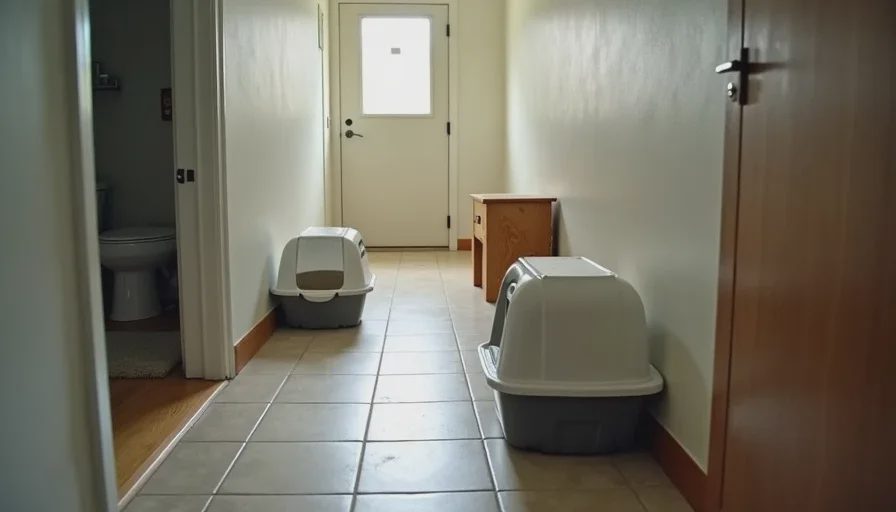
I started with three cats and three litter boxes. It felt reasonable. One each. I scooped daily. I used the same unscented clumping litter everyone recommended. For a while it worked well enough that I stopped thinking about it.
Then the accidents started.
First a small puddle behind the couch. Then one on the bathroom rug. Then a full deposit on the bath mat the morning after I had been out late. Miso was the usual suspect in my head because he is the oldest and most opinionated, but the timing never matched. Nori was too careful. Dumpling was too food-motivated to waste energy on protest peeing. The truth was simpler and more annoying: three boxes in a multi-cat home is often not enough, and location matters as much as number.
The Equation That Actually Works
The standard recommendation from feline medicine groups is straightforward: one litter box per cat, plus one extra. Three cats means four boxes minimum. Four cats means five. It is not a suggestion designed to sell more plastic. It is the number that reduces competition and gives every cat a clean option when another cat has just used one or is standing nearby.
Cats do not share resources the way dogs often do. A litter box is a toilet, a territory marker, and occasionally a place one cat can block from another. When boxes are limited, the more confident cat can effectively control access without ever looking aggressive. The quieter cat simply finds another surface.
In my apartment the fourth box changed the pattern within days. The accidents stopped. I still scoop twice a day because three cats produce a lot of waste, but the urgency and the resentment disappeared.
Why Location Beats Quantity Alone
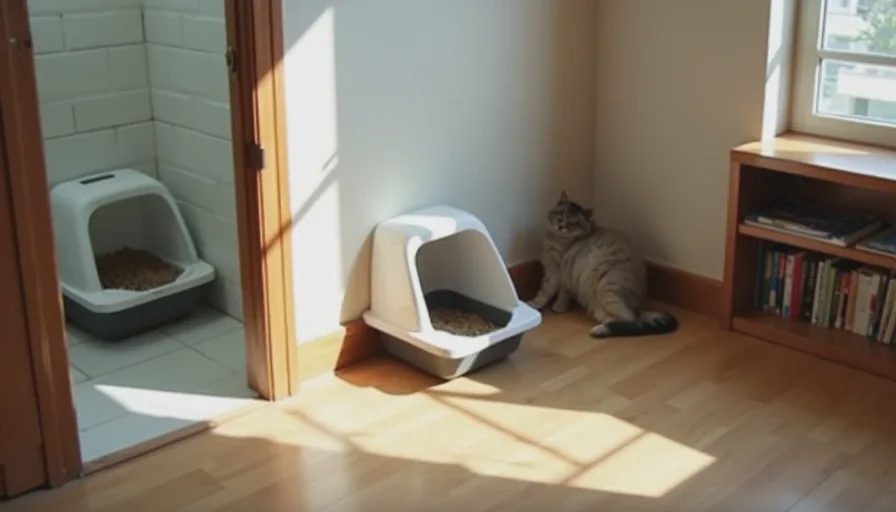
Four boxes lined up in the same bathroom count as roughly one resource in cat logic. They need to be distributed.
Good placement rules that actually held up here:
Separate rooms or at least separate zones so no single cat can guard the entire set
Quiet but not isolated — a dead-end closet with only one exit makes many cats uneasy
Away from food and water
Away from loud appliances (washer, dryer, furnace)
On every floor if you have more than one level
Easy escape routes in at least two directions
I keep one in the main bathroom, one in the bedroom closet with the door propped open, one in a low-traffic corner of the living room, and one near the back of the apartment where the fosters usually start. The living-room box looks the least elegant. It also gets used the most by Dumpling, who treats the entire apartment as her stage and does not like waiting.
Covered boxes are popular because they hide the mess from humans. Most cats prefer open ones. A cover traps odor (which cats smell more intensely than we do) and creates a potential ambush point. I tried covered boxes early on. Two of the three cats avoided them. The open ones stayed in use.
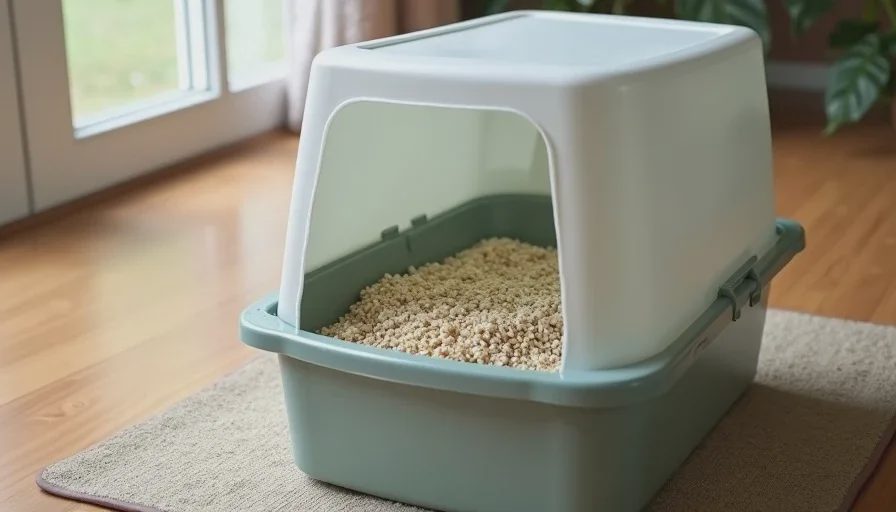
Size matters more than style. A box should be at least one and a half times the length of the largest cat from nose to base of tail. Many commercial boxes are simply too small for an adult cat to turn around and dig comfortably. I switched to larger storage-bin style boxes years ago. They are uglier. They get used.
Cleaning Reality in a Three-Cat Home
Daily scooping is the floor, not the ceiling. In practice I scoop every time I walk past if something is visible. Full litter changes happen weekly, sometimes sooner if the boxes start to smell even after scooping. I wash the boxes with hot water and a mild unscented soap or just baking soda. Strong cleaners leave a scent that can drive cats away from an otherwise acceptable box.
Litter type is personal. I stick with unscented clumping clay because it is what all three accept and what new fosters usually recognize. Scented litter, crystals, or sudden switches have caused temporary strikes in this house. When I experiment, I do it in one box only and watch which cats continue to use it.
What the Accidents Were Really Saying
Inappropriate elimination is one of the top reasons cats lose their homes. Before assuming attitude or spite, rule out medical issues. A urinary tract infection, crystals, arthritis that makes climbing into a high-sided box painful, or gastrointestinal upset can all look like “bad behavior.” Any sudden change in litter habits gets a vet check first.
Once medical causes are cleared, the remaining problems are almost always environmental: not enough boxes, boxes in the wrong places, boxes that feel unsafe, or boxes that are not clean enough by cat standards. Punishment does not fix any of those. It only adds stress.
In this household the combination of a fourth box, better distribution, and stricter scooping ended the problem. Miso still occasionally digs with unnecessary drama. Nori still prefers the quietest box. Dumpling still sometimes stands in the box and stares at me while she goes, which is her version of performance art. None of them are going outside the boxes anymore.
A Practical Starting Setup for Three Cats
Four uncovered boxes, each large enough for the biggest cat
Placed in four different zones with clear exit routes
Unscented clumping litter, 2–3 inches deep
Scooped at least twice daily
Fully changed and washed weekly
One box kept in the area where any new or shy cat spends most of its time
If you live in a small apartment the extra box can feel like clutter. It is cheaper and less stressful than replacing rugs or dealing with ongoing avoidance. I resisted the fourth box for months because the apartment already felt full. The week of repeated clean-ups convinced me faster than any article could have.
The litter box equation is one of the few pieces of multi-cat advice that is both simple and non-negotiable. Get the number and the placement right, keep the boxes clean, and most of the drama disappears. The cats still have opinions about everything else. At least the floor stays dry.
Your cat, your rules.



Letters
No letters yet. Yours could be the first.