Case file: three cats, one apartment, zero neutral territory
Intake details: Miso, orange tabby, former underweight medical mess; Nori, Devon Rex, professional under-bed resident; Dumpling, calico, shelter paw-reacher and newest household dictator. This is my multi-pet household, and I am reporting from the scene after eight years of fostering more than 40 cats.
My biggest mistake was assuming that because I loved every cat, they would automatically love each other. Adorable theory. Completely useless in practice. I brought a foster kitten through the front door, set the carrier down in the living room, and watched Miso become a puffed-up orange question mark. Nori vanished for three days. The kitten screamed every time somebody sneezed. I spent the evening apologizing to everyone, including the cat who started the problem by existing.
A peaceful multi-pet household is not built by forcing friendship. It is built by managing resources, scent, escape routes, routines, and expectations. Some cats become grooming partners. Some agree to share a hallway like coworkers who do not make eye contact. Both outcomes count as success.
Start introductions like a boring scientist
The safest introduction begins with separation, not a face-to-face meeting. Give the newcomer a private room with food, water, a litter box, hiding places, and a scratching surface. Keep the resident cats’ routines as normal as possible. If the new cat has an unknown medical history, schedule a veterinary exam before shared spaces. Parasites, respiratory infections, and painful dental issues can turn a tense meeting into a full household crisis.
For several days, swap bedding or use a clean cloth to carry cheek scent from one cat to another. Feed meals on opposite sides of the closed door. Start far enough away that everybody can eat. Move bowls closer only when the cats remain relaxed. Hissing is information, not a moral failure, but repeated lunging, screaming, or refusal to eat means the process is moving too quickly.
Then try brief visual contact through a baby gate or cracked door. End the session while it is still boring. Five calm minutes beats one dramatic hour. In my multi-pet household, Nori needed almost three months before she stopped treating Miso like a home invasion. Slow was not cruel; slow was the reason nobody needed stitches.

The litter box math nobody wants to hear
The classic starting point is one litter box per cat, plus one extra. That means a three-cat home needs four boxes, preferably in different locations rather than four lined up in a basement corner. Cats do not experience a row of boxes as four separate bathrooms if one confident cat can guard the entire area.
Use quiet, accessible spots with more than one exit when possible. A box beside a loud washer can look convenient to a person and feel like a trap to a nervous cat. I learned this after finding urine beside the machine and blaming “bad behavior.” The actual culprit was a box location that shook during the spin cycle.
Scoop at least once daily; twice is better in a busy home. A large uncovered box often works better than a small designer model. I spent $200 on a stylish automatic litter box that turned into an expensive sandbox because Dumpling refused to enter it. A basic high-sided pan costing roughly $15 to $30 solved the immediate problem. Clean, roomy, predictable beats impressive.
If a cat suddenly avoids the box, strains, cries, produces tiny amounts of urine, or urinates repeatedly, contact a veterinarian promptly. Medical problems can look like spite, and cats are not plotting bathroom-based revenge.
Feeding time is a diplomacy summit
Food is another resource that can create silent warfare. One cat may eat quickly, then patrol the room for leftovers. Another may need half an hour and a feeling of safety. Feed cats in separate stations if anyone blocks, stalks, or steals. Closed doors are not overreacting; they are useful management.
In a multi-pet household, measured portions make it easier to notice appetite changes. I use shallow ceramic dishes, because some of my cats object to whiskers touching deep bowls with the intensity of a labor dispute. Wet food should not sit out indefinitely, especially in a warm room. Refrigerate leftovers promptly and wash dishes regularly.
Puzzle feeders can slow a fast eater and provide mental work, but introduce them when the room is calm. Do not put one competitive feeder between three cats and call it enrichment. That is an arena. Give each cat enough space to eat without watching another cat’s shoulders. If a cat is losing weight, gaining rapidly, vomiting often, or suddenly drinking much more, a veterinary check matters more than a new bowl.
Build vertical space and escape routes
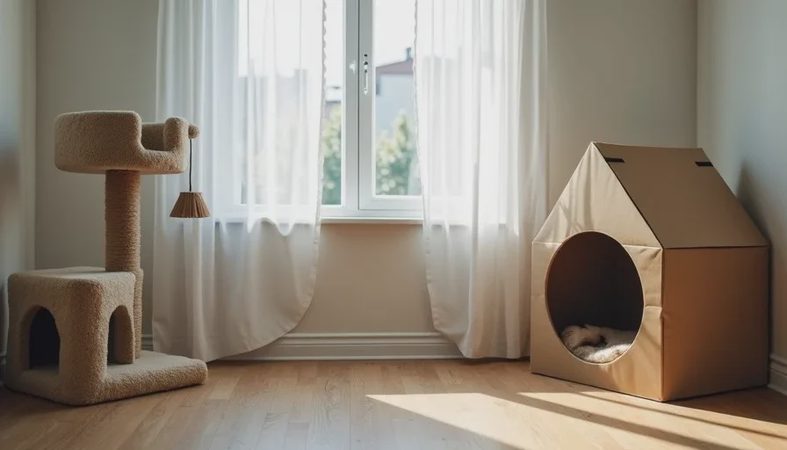
Floor space is only part of the territory. Cat trees, sturdy shelves, window perches, and the top of a secure cabinet can give cats ways to pass each other without confrontation. In my apartment, a $70 scratching tower became more useful after I placed it near a window instead of in an empty corner. Location changed its value.
Every cat should have places to retreat, including low hiding spots for seniors or cats with mobility problems. Do not create a single narrow tunnel that leads to one dead end. A nervous cat needs an exit, and a resident cat should not be able to trap another behind the sofa.
Play also works better individually than as one chaotic group event. Ten minutes with a wand toy in a closed room can help a shy cat build confidence. Rotate cardboard boxes, paper bags without handles, and safe toys rather than filling the floor with everything at once. Novelty has more impact when it arrives in small doses.

I spent the money so you do not have to
The most useful purchases in my multi-pet household were not the fanciest ones. A $12 pack of washable fleece blankets helped create separate sleeping areas. A $25 baby gate made visual introductions possible. A $10 pack of plastic food mats protected the floor under messy eaters. A basic carrier for each cat prevented the emergency scramble when a vet visit happened.
I also tested a Feliway diffuser at about $25 for a refill period. It seemed to help Miso settle during one transition, but it did nothing obvious for Nori. That is the honest review: environmental tools can support a plan, but they cannot replace separation, medical care, or enough resources. Skip products that promise to make every cat instantly affectionate.
Spend first on veterinary care, sturdy litter boxes, carriers, and barriers. Then watch the cats for a week before buying another gadget. Their behavior will tell you whether the problem is crowding, competition, fear, boredom, or pain.
What peaceful actually looks like
A successful multi-pet household does not require three cats sleeping in one artistic pile. Success can mean eating without guarding, walking through a room without stalking, using the litter box reliably, and choosing separate beds without conflict. My cats still have disagreements. Miso complains when Dumpling occupies his favorite chair. Nori occasionally bats at a tail passing too close. Nobody is required to become everybody’s best friend.
If conflict breaks out, do not grab fighting cats with bare hands. Use a barrier such as a large piece of cardboard, separate them, and let everyone decompress. Return to the last introduction step that worked. Persistent attacks, injuries, ongoing hiding, appetite changes, or house-soiling deserve help from a veterinarian and, when available, a qualified feline behavior professional.
The best multi-pet household plan is boring, repeatable, and adjusted for the actual cats living in it. Your cat, your rules.


Letters
No letters yet. Yours could be the first.