The first time I tried to introduce two cats, I made the classic mistake: I opened the carrier in the living room and assumed everyone would figure it out. Miso, my resident orange tabby, responded by becoming a furious hallway bouncer. The new foster hid behind the washing machine, and I spent three days apologizing to both of them. If you are learning how to introduce two cats, start with this rule: slow is not failure. Slow is the plan.
The Case File: Start With the Cats You Actually Have
Before bringing a new cat home, write down a quick case file for both animals. Include estimated age, medical history, energy level, litter habits, food preferences, and how each cat reacts to change. A confident two-year-old who body-slams toy mice needs a different introduction than a senior cat who considers a cardboard box a personal fortress.
A veterinary checkup matters before close contact. The new cat should be screened for contagious illness and parasites, and vaccinations should be discussed with your veterinarian. Keep the newcomer separate until you know both cats are healthy. This is especially important with shelter cats, bottle babies, and fosters whose history is incomplete.
Prepare a private transition room with a litter box, water, food, a scratching surface, hiding places, and a washable bed. A spare bathroom works, although a bedroom is kinder for a longer stay. Your resident cat should keep access to familiar spaces, feeding times, and attention. The goal is not to punish the original cat or turn the newcomer into a prisoner. It is to create two safe zones before asking for friendship.
How to Introduce Two Cats Through Scent First
Cats gather information with their noses before they are ready to gather it face-to-face. For the first few days, keep the cats separated and trade bedding between rooms. Rub a clean sock or soft cloth gently along one cat's cheeks, where friendly facial scent collects, then place it near the other cat's food. Do not shove it under a suspicious nose. Let curiosity do the work.
Feed both cats on opposite sides of the closed door. Begin far enough away that everyone will eat. Over several meals, move the bowls closer by a few inches. If one cat stops eating, growls, or camps beside the door, you moved too quickly. Back up and try again at the previous distance. Mealtimes should teach each cat that the smell of the other predicts something good, not a surprise wrestling match.
I also rotate rooms when practical. Miso explored the foster room while the foster investigated the living room, with no direct meeting. This let each cat smell the other's territory without having to defend it. Keep the first swaps brief, perhaps 10 to 20 minutes, and end them before either cat becomes overstimulated.
Add Visual Contact Without Creating a Chase Scene
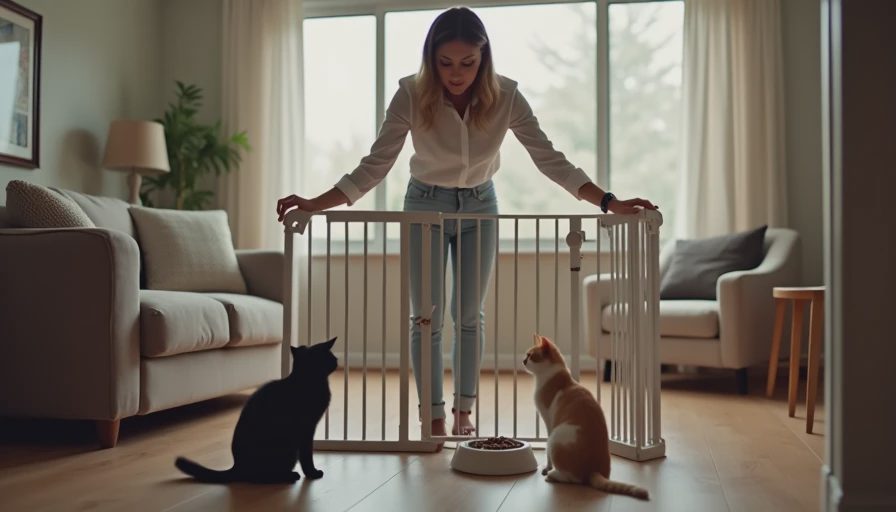
Once both cats eat calmly near the closed door, add a visual barrier. A tall baby gate, screen door, or securely cracked door can work. Check the setup carefully; determined cats can climb, squeeze, and launch themselves with the confidence of tiny circus professionals. Feed treats or wet food during these short viewing sessions.
At this stage, hissing is information, not automatically an emergency. A hiss says, “That is too close for me.” Staring, stiff posture, flattened ears, repeated swatting, growling, or lunging means the session needs to end. Distract calmly with a tossed treat away from the barrier, close the door, and give both cats time to decompress. Never punish a hiss. Punishment can make the other cat's presence feel even more dangerous.
When researching how to introduce two cats, you will see timelines ranging from a few days to several months. Both can be normal. A relaxed adult pair may progress quickly; a fearful former stray or territorial senior may need many small repetitions. Measure progress by behavior: eating, grooming, playing, and resting near the barrier are better signs than a calendar date.

The First Face-to-Face Meeting
Choose a room with escape routes, furniture, and no valuable heirloom glassware. I learned that last part after Dumpling knocked a vintage serving dish off a shelf during a supervised introduction. Keep the first meeting short, perhaps two to five minutes. Use toys or treats to create parallel activity, but do not force the cats to touch noses or share a lap.
Let the resident cat enter first if that keeps the environment familiar. Bring in the new cat only when both are reasonably calm. Watch for loose bodies, normal sniffing, brief looking away, and the ability to disengage. If either cat locks onto the other, blocks an exit, or begins stalking, separate them using a pillow, blanket, or large piece of cardboard as a visual shield. Do not put your hands between fighting cats.
Repeat short meetings once or twice daily, slowly adding time. Continue separate feeding areas and provide at least one litter box per cat plus one extra. Spread water bowls, scratching posts, beds, and elevated resting spots around the home so one cat cannot control every resource.
I Spent $X So You Do Not Have To
My useful introduction supplies were gloriously unexciting: two extra litter boxes, a $12 wand toy, washable blankets, baby gates, and several cans of the cats' favorite wet food. A standard Feliway diffuser cost about $25 and lasted roughly 30 days; it seemed to take the edge off for Miso but did nothing obvious for Nori. I would treat pheromone products as optional support, not a replacement for separation and patience.
Skip the $200 “solve every behavior” litter box until the cats are comfortable sharing a household. During one foster period, mine became a very expensive sandbox with a blinking light. Spend first on duplicate resources and secure barriers. Those purchases solve practical problems immediately and can be reused for future fosters, vet recovery, or a cat who simply wants dinner without an audience.
If the Introduction Goes Sideways
A setback does not erase progress. Separate the cats, return to scent swapping, and wait until both are acting normally before trying visual contact again. If there is a bite, injury, ongoing food refusal, repeated urination outside the box, or extreme hiding, contact a veterinarian. Pain and illness can look like “bad attitude,” and behavior support is much easier when medical causes are addressed.
Some cats never become cuddle buddies. Peaceful roommates are still a successful outcome. My three cats have different alliances: Miso plays chase with Dumpling, Nori prefers quiet furniture, and everyone agrees that dinner is a group project. Aim for safety and reduced tension, not an internet-perfect pile of sleeping kittens.
Learning how to introduce two cats is really learning how to read individual animals. Give them room to say no, reward calm behavior, and make the next step smaller when needed. Your cat, your rules.



Letters
No letters yet. Yours could be the first.