The first time I tried to introduce a new foster cat to Miso, I made the classic mistake: I opened the carrier in the living room and hoped everyone would “work it out.” Miso hissed, the foster launched behind the washing machine, and I spent forty minutes fishing a terrified animal out with a yardstick. If you are searching for how to introduce new pet, please learn from my spectacular lack of preparation. Cats do not need a surprise party. They need a slow, predictable plan.
The goal is not instant friendship. A peaceful roommate arrangement counts. Some cats eventually sleep in a pile; others politely ignore each other for ten years. Both outcomes are successful. Your cat, your rules, and your new animal’s comfort matter more than an imaginary deadline.
Start With a Separate Room
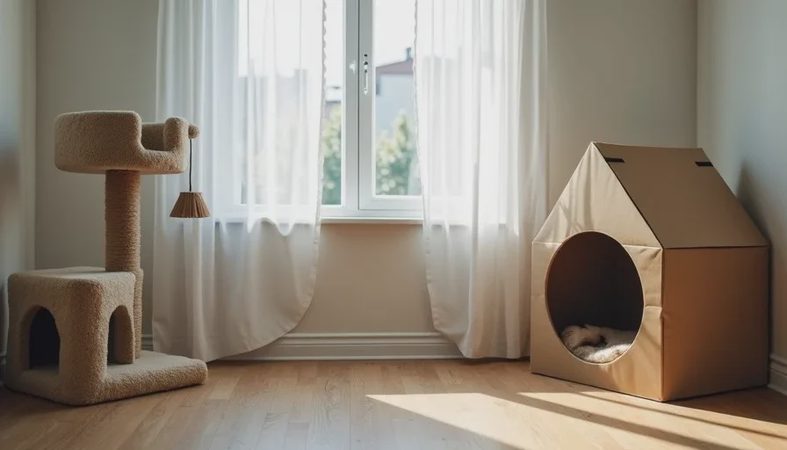
Before the new pet crosses the threshold, choose a quiet “base camp” with a solid door. A spare bedroom, bathroom, or office can work. Add food, water, a litter box, a scratching surface, a hiding spot, and something soft that smells like you. Keep food and the litter box separated as much as the room allows.
Your resident cat should keep access to the rest of the home. This is not punishment for the newcomer; it prevents the established cat from feeling evicted. For the first few days, the cats should not see each other. When people ask how to introduce new pet, this boring separation step is the part I emphasize most. Boring is good. Boring prevents veterinary bills.
Book a veterinary exam for the newcomer as soon as practical, especially if the animal’s medical history is incomplete. Ask about parasites, vaccines, contagious illness, and whether testing is appropriate. Until you have that information, separate food bowls, bedding, and litter supplies are sensible household hygiene.
Let Scent Do the First Meeting
Cats build a social file with their noses before they trust what their eyes see. After the new pet has settled for a day or two, rub a clean sock or small towel around the newcomer’s cheeks, then leave it near your resident cat’s favorite resting area. Do the reverse with another cloth. Do not shove the fabric under anyone’s nose. Place it nearby and let curiosity win.
You can also trade bedding, switch rooms briefly, or offer treats on opposite sides of the closed door. If either cat growls at the door, increase the distance between the food and the door. The point is to create a simple association: strange smell appears, good snack appears. For one foster, freeze-dried chicken worked. For Nori, it had to be a teaspoon of warmed wet food served on a flat saucer.

Move to Controlled Visual Contact
Once both animals can eat, play, or relax near the closed door, introduce a visual barrier. A tall baby gate, screen door, or securely cracked door can work, although some determined cats treat baby gates as an escape-room challenge. Never rely on a flimsy barrier if either animal is likely to climb or bolt.
Keep the first visual sessions short, perhaps thirty seconds to two minutes. End while everyone is still reasonably calm. A hard stare, flattened ears, stalking posture, repeated swatting, or escalating vocalization means the session was too intense. Close the barrier, give both cats space, and try again later at an easier distance.
This is the practical answer to how to introduce new pet without forcing contact: control the intensity. You are not trying to make them cuddle. You are collecting information. Loose bodies, normal grooming, eating, and the ability to look away are encouraging signs.
Supervise the First Shared Space
When barrier sessions become uneventful, let the new pet explore a larger area while the resident cat is elsewhere. Then switch. This gives each animal a chance to investigate the other’s scent without a face-to-face confrontation. I like doing these exchanges after a play session, when the cats have burned off some dramatic hallway energy.
For the first shared-room meeting, open the door and allow the newcomer to choose whether to come out. Keep a wand toy, treats, and a pillow or piece of cardboard nearby to block sightlines if needed. Do not pick up a tense cat unless there is immediate danger; a frightened cat can redirect a bite or scratch onto your arms.
A brief hiss is communication, not automatic failure. Chasing, cornering, biting, prolonged fighting, or one animal refusing food afterward means you need to separate and return to an earlier step. Learning how to introduce new pet is mostly learning when to slow down.
I Spent $X So You Don’t Have To
My introduction setup has included expensive gadgets, attractive cat tunnels, and one $200 litter box that became an oversized sandbox. The equipment that consistently mattered cost less. A solid door costs nothing. Two cardboard boxes create useful hiding places. A spare baby gate can be found for roughly $25 to $60. Extra litter boxes and washable food dishes are more important than a luxury pheromone gadget.
A Feliway diffuser, often around $20 to $30 for the starter unit, helped Miso take the edge off during one move but did absolutely nothing for Nori’s introduction. I consider it optional, not magic. Spend first on duplicate resources: for multiple cats, provide separate feeding areas, several water options, scratching surfaces, and litter boxes placed in different locations. Crowding creates conflict faster than a lack of designer enrichment.

Troubleshooting the Awkward Middle
If the resident cat stops eating, hides constantly, urinates outside the box, or begins overgrooming, pause the introduction and contact your veterinarian if the change persists or seems severe. Stress can contribute to illness, but behavior changes can also signal a medical problem. Do not assume every symptom is jealousy.
If the new pet is a dog, use the same gradual process with extra attention to movement. Keep the dog leashed for initial visual sessions, reward calm behavior, and make sure the cat has elevated escape routes and dog-free essentials. A cat should never have to pass a barking dog to reach water or a litter box.
For kittens, energy can become its own problem. A playful kitten may repeatedly pounce on an older cat who has clearly requested retirement. Interrupt with a toy, provide kitten play sessions, and protect the older cat’s nap schedule. How to introduce new pet successfully depends on personality, age, health, and history, not just the number of days on a calendar.
A Realistic Timeline and Final Check
Some introductions take a week. Many take several weeks, and fearful cats can need months. Progress is not a straight line. A loud thunderstorm, a visiting dog, or a rushed doorway encounter can set everyone back. That does not erase the work; it tells you the next session needs to be easier.
Before allowing unsupervised time, confirm that both animals can move through shared spaces without stalking, blocking, or repeated conflict. Keep separate resources available even after things improve. Cats often tolerate each other better when they do not have to compete for the only sunny window or litter box.
The best answer to how to introduce new pet is patient management, not forced bonding. Go slowly, reward calm choices, and give every animal somewhere safe to retreat. I have cried in my car after a failed introduction and celebrated when two cats finally passed each other in the hallway without drama. That quiet hallway was the victory. Your cat, your rules.


Letters
No letters yet. Yours could be the first.